
Prophet story 28 of 30
شيث
Shith
peace be upon him
Keeper of Good Knowledge
✦ Additional Prophetic Figure — Islamic Tradition
Source: Islamic tradition / disputed report details
✦ Step Into the Story
🔮 What Do You Already Know?
No pressure — just guess! This helps you see how much you grow.

The Earliest Human Community
In the earliest period of human history, after Adam and his family began their journey on Earth, the community began to grow in number. This was a time where people learned how to live upon the land and maintain the values that had been established. In Islamic historical tradition, a son named Shith is remembered from this early era. Islamic tradition / classical historical sources — not named in the Qur’an. While he is not mentioned by name in the Qur’an, many classical scholars and historians, including Ibn Kathir, have recorded his role as a righteous figure who continued the teachings of guidance.
❓ Is Shith mentioned by name in the Qur'an?
The family of Adam had experienced various events, including moments of obedience and moments of difficulty. The Qur’an mentions the story of two of Adam’s sons and the first tragedy between them, though it does not provide their specific names. Within this historical context, Islamic tradition places Shith among the righteous children of Adam. He is described as one who continued the path of worship and obedience, serving as a link in the chain of early humanity. This role is important because it represents the first steps of a growing community staying focused on its core purpose.
❓ What was Shith’s main role according to Islamic tradition?
Life in these earliest generations was focused on establishing a foundation of faith. History does not record that Shith built massive cities or engaged in grand adventures, but rather that he was a prophet who carried guidance forward. He is remembered for his role in showing the community how to live a life of worship through the teachings that had been established by Adam. By focusing on his role as a carrier of truth, we learn that the most important part of any person's life is how they handle the knowledge and beliefs they have been given.
❓ What do scholars say about the reports of scrolls given to Shith?
Because the Qur’an provides no direct narrative about Shith, scholars are very careful about how they describe his life. We do not invent specific conversations or list miracles that are not found in the primary sources. Instead, we look at the core theme of his story which is the inheritance of truth. Every generation receives something from the one before it—habits, stories, and beliefs—and Shith is recognized in tradition as one of those who protected the most important knowledge of all: the worship of Allah. This focus on truthful source handling is a vital part of being a student of history.
❓ Who does tradition say Shith bridged the gap between?

Passing Knowledge Forward
When a child learns something new, like a specific prayer or a way to be kind, they become a keeper of that knowledge. Eventually, that child might share that knowledge with someone else. This process is how values survive across hundreds and thousands of years. According to Islamic tradition, Shith was responsible for this very task in the earliest days of mankind. He did not invent the worship of Allah, but he was responsible for carrying it carefully so that it would not be lost or changed as the human family expanded.
Everything in our world today, from the languages we speak to the skills we use in our daily lives, is passed down from one person to another. Some of these things are physical, like knowing how to plant seeds or build a shelter, but the most important things are spiritual and moral values. Shith is described in classical historical literature as a person who protected these values during a time of transition. He helped ensure that the knowledge of the Creator remained the central focus of the people around him as they moved into new areas.
Being responsible for the truth is a significant duty that requires patience and honesty. When someone is tasked with preserving a message, they must be careful not to add things to it or take things away. In the accounts provided by historical scholars, Shith is portrayed as an example of this careful preservation. By following the guidance that had been established, he showed that the best way to respect the past is to keep the beneficial teachings of those who came before us alive in our own actions and words.
This concept of a chain of knowledge is a lesson for every person today. When you learn a verse from the Qur’an or a teaching from the Sunnah, you are joining a very long line of people that stretches all the way back to the beginning of time. You become a carrier of guidance, just as tradition describes Shith. By valuing what you learn and treating it with respect, you are doing your part to make sure that the truth remains clear for the people who will come after you. This is the beautiful responsibility of every generation.
Source Detective
Being a source detective means looking closely at where information comes from before we accept it as a total fact. When we study the life of Shith, we encounter different types of information. First, we know that he is not named in the Qur’an, which is our most certain and primary source. His status as a prophet and his place in the family of Adam come from classical historical records and the works of scholars who studied early human history. This distinction is very important for a student to understand.
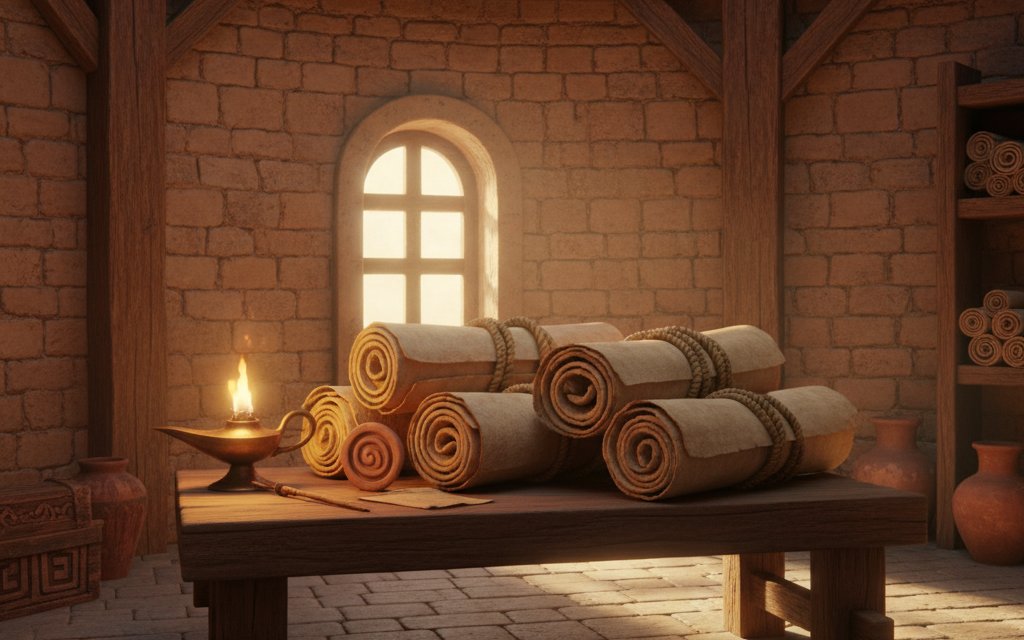
Some reports found in later Islamic literature, including a report attributed to Abu Dharr, mention that Shith was given a specific number of scrolls containing guidance. However, it is essential to know that scholars have differed over the strength and authenticity of these reports. Because the hadith authenticity is debated, we do not present the exact number of scrolls as an unquestioned fact. Reported in later Islamic sources; hadith authenticity is debated. This approach is not a sign of weakness in the story, but rather a sign of excellent and honest scholarship.
When we label information correctly, we show respect for the truth. If a story is part of historical tradition but not confirmed by the Qur’an, we state that clearly. This helps us avoid making mistakes or claiming things that we cannot prove. Shith’s chapter is a perfect place to practice this skill. By learning to say, 'This is what the tradition says,' instead of, 'This is an absolute certainty,' we protect the integrity of our faith and our history. We learn to value the sources that are most reliable.
This commitment to honesty requires restraint. It means we do not invent dramatic miracles or specific details about Shith's life just to make the story sound more exciting. The truth of a prophet continuing the guidance of Adam is already a powerful and sufficient lesson. By sticking to what the sources support, we teach ourselves to be people of integrity who value accuracy. This is one of the most important lessons we can take away from studying the figures of early Islamic history.

The Chain of Generations
Human history can be viewed as a continuous sequence where each group of people passes a lantern to the next. In Islamic tradition, Shith is a vital link in this sequence. He represents the connection between the very first human family and the generations that would eventually follow, leading toward the time of later prophets like Nuh. This continuity shows that the message of worshipping Allah alone has been present since the very beginning and has been carried by righteous individuals throughout every era.
The lesson of this 'Generation Chain' is not about knowing exact dates or every single name in a family tree, as those details are often not preserved. Instead, the lesson is about the importance of staying consistent. Just as symbolic objects like a lamp or a seed represent the passing of light and life, the story of Shith represents the passing of divine guidance. Each link in the chain had a responsibility to ensure that the next link was strong and well-informed. This is how the truth has survived for so long.
To put this lesson into practice, think about your own family and the things you have learned from those older than you. You can take part in a family challenge by asking a parent or grandparent to teach you a specific dua, a useful skill, or a story from your own heritage. By doing this, you are participating in the same process of carrying guidance forward. When you record what you have learned in a journal, you are helping to preserve that knowledge for the future, just as Shith is remembered for doing.
Shith's importance in Islamic tradition is found in his righteousness and his role as a preserver of the truth. Even though his detailed biography is not in the Qur'an, his legacy is one of steadfastness. He reminds us that we do not need to be the center of a dramatic story to be important in the eyes of Allah. Being a person who carries good knowledge carefully and shares it with others is a noble path that connects us to the very first righteous people who walked the earth.
✨ Miracle Spotlight
No specific physical miracle is established in the Qur’an for Shith. Do not invent one.
🌙 Pause & Imagine
Pause and imagine a quiet, sunlit path where the first families walked together in peace.
💡 Did You Know?
Shith is not named in the Qur’an, but is remembered in Islamic historical tradition as a righteous prophet.
🔤 Arabic Word Discovery
'Ilmun Nafi'
beneficial knowledge
“I pass on 'ilmun nafi' that my family taught me.”
✨ Story questions: 0 / 4
🎓 What Did You Learn?
Finish the story first, then test what you learned.
Real-Life Mission
Learn one useful thing from an older family member and write it in your Journey Journal.
🛂 Finish reading to earn this stamp.
💡 What can we learn?
🏮 Trivia quiz
1. Who was Shith traditionally said to be the son of?
2. Is Shith named in the Qur’an?
3. What is the key lesson of the chapter?
🖼 Picture match
Tap a word on the left, then its match on the right.
🧭 Order the story
Tap the events in the right order.
✅ What We Know for Certain
- ✦Shith is not named in the Qur’an.
- ✦Classical Muslim historians and scholars transmitted that he was a prophet.
- ✦Reports about scrolls exist, but their authenticity is debated.
- ✦The safest lesson is continuity of guidance and truthful source handling.
🔎 Source Detective
Should we say “50 scrolls were given to Shith” as a sure Qur’an fact?
🧿 Hidden Object Scene
Look back through this chapter's pictures. Tap each thing when you spot it — some may be hiding, some may be missing!
🏅 Badge
🎯 Multiple choice
❓ When a report is debated, we should:
⚖️ True or false
Every popular story about early prophets is equally reliable.
🌱 Reflection: What can I learn?
What good knowledge has your family passed down to you?
🌟 Famous Stories
The Successor of Adam ❔ Traditional reportReported in classical histories (Ibn Kathir, Al-Tabari)
When Adam, the first prophet, peace be upon him, grew old, he knew his time on Earth was ending. From among his children, he chose his righteous son Shith to be the leader after him. Allah had chosen Shith, peace be upon him, to be the next prophet, so Adam passed on the special knowledge he had received from Allah. This was a sacred trust to make sure humanity would not be left without guidance.
Adam, peace be upon him, taught Shith about the hours of the day and night and the specific acts of worship that should be performed during those times to remember Allah. He also passed on the laws and wisdom that would help people live together in peace and fairness. Shith, peace be upon him, listened carefully and understood the great responsibility he was being given to lead his people on the straight path.
Before he passed away, Adam also informed Shith, peace be upon him, of a prophecy about a great flood that would one day cover the Earth. This was knowledge from Allah about a future event. After his father's death, Shith, peace be upon him, became the new prophet and teacher for mankind. He carried the light of guidance passed down from Adam, reminding the people to worship Allah alone and to live according to His commands.
💡 Lesson: Allah always provides guidance for humanity by sending prophets to continue the message.
❓ Quick questions
Question 1 / 3
Who did Adam, peace be upon him, choose to be the leader after him?
The Fifty Scrolls ❔ Traditional reportReported in classical tafsir (Ibn Kathir, Al-Suyuti) and some narrations.
After Adam, peace be upon him, passed away, Allah did not leave humanity without a guide. He chose Shith, peace be upon him, as a prophet and revealed divine knowledge to him directly. This sacred guidance came in the form of scrolls, which are called 'suhuf' in Arabic. These were not ordinary writings, but pages containing wisdom and commands sent down from Allah to guide the people.
According to Islamic tradition, it is reported that Allah revealed fifty scrolls to the Prophet Shith, peace be upon him. Receiving revelation from Allah is a great honor for a prophet. These fifty scrolls contained important teachings for his people. They taught about the oneness of Allah (Tawhid), explained how to live good and moral lives, and gave instructions on how to worship Allah correctly, continuing the religion of his father, Adam.
The scrolls given to Shith, peace be upon him, were part of a long chain of revelations from Allah to His prophets. It is reported that Adam also received scrolls, and prophets who came later, like Ibrahim (Abraham) and Musa (Moses), peace be upon them, also received scrolls and books. Shith, peace be upon him, carefully protected this divine message and used the fifty scrolls to teach his people and remind them of their Creator.
💡 Lesson: Allah sends His guidance to humanity through revealed books and scrolls given to His chosen prophets.
❓ Quick questions
Question 1 / 3
According to tradition, how many scrolls did Allah reveal to Shith, peace be upon him?
🤲 Prophetic Dua
No specific personal dua of this prophet is recorded in the Qur'an. We don't invent one — try the duas of other prophets!
📖 Sources
Not named in the Qur’an — classical historical sources (e.g. Ibn Kathir)
👪 For parents & teachers
Sources: Not named in the Qur’an — classical historical sources (e.g. Ibn Kathir)
Detail notes: Stories are based on the Qur'an first. Where a detail comes from hadith or later historical reports, the text says so. Please review with a trusted teacher.
Translations are provided for learning. For Qur'anic wording, refer to an approved Qur'an translation in your language.
These five chapters use a different source category from the 25 prophets named directly in the Qur’an. The app distinguishes Qur’anic text, authentic hadith, classical tafsir, Islamic historical tradition, and disputed reports so children learn both the stories and how religious knowledge is sourced.