
Prophet story 29 of 30
دانيال
Daniyal
peace be upon him
Faith Far From Home
✦ Additional Prophetic Figure — Islamic Tradition
Source: Islamic historical tradition / earlier-scripture material
✦ Step Into the Story
🔮 What Do You Already Know?
No pressure — just guess! This helps you see how much you grow.
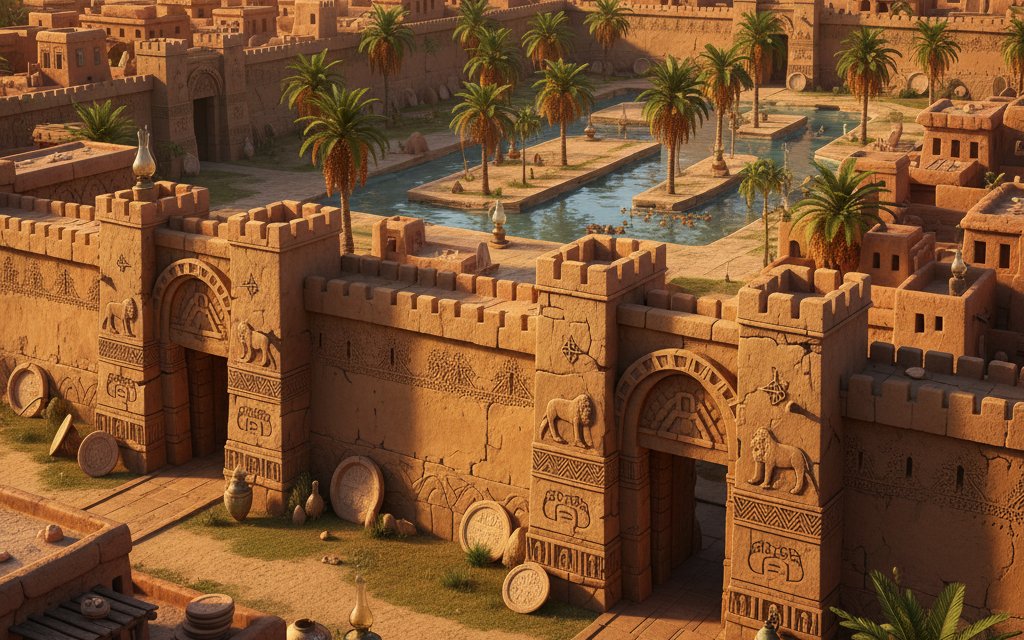
Ancient Babylonian-Persian World
Islamic historical tradition — Daniyal is not named in the Qur’an, and details of his life come mainly from later Muslim historical reports and earlier scriptural traditions.
❓ Is the name of Daniyal mentioned in the Qur'an?
In the study of Islamic history, scholars often discuss the era of the ancient Near East, specifically the regions of Babylon and Persia. Within these historical traditions, the name Daniyal is remembered with great respect. While it is important to note that he is not named in the Qur’an, he is widely recognized in Muslim historical tradition as a prophet and a righteous man. His life is traditionally connected to the world of Mesopotamia and Persia, appearing in accounts that describe his presence in these ancient lands long ago.
❓ How did Daniyal act while living in a foreign court according to tradition?
Learning about figures who are not explicitly named in the Qur’an provides a valuable educational opportunity for children. It helps us understand that Islamic scholarship treats different types of information with different levels of certainty. Because details of his life come mainly from later Muslim historical reports and earlier scriptural traditions, we approach these narratives with a specific kind of care. We recognize that while these stories are part of the heritage of the region, they are classified as traditional accounts rather than direct Qur'anic revelation.
❓ What should a person do if they have more wisdom than others?
Historical reports connect the memory of Daniyal with early Muslim communities who encountered traditions about him in Persia. Specifically, reports describe the discovery of his burial site in a place called Tustar. This connection highlights how early Muslim authorities treated the remains of earlier believers with seriousness and honor. For a child learning about history, this shows that faith is a continuous thread that links people across many different times and places, even when the environment changes.

The presence of Daniyal in historical memory reminds us that a person’s legacy is built on their character. Even when living in a foreign environment far from familiar surroundings, his reputation for righteousness survived through the centuries. This teaches us that being in a new place does not mean we lose our identity or our values. We can be part of a large, diverse world while still keeping our internal compass pointed toward what is right and true.
❓ What is the main message of Daniyal's life for children?
Wisdom in a Foreign Court
One of the primary ways Daniyal is remembered in Islamic historical tradition is through his connection to powerful rulers and his presence in the royal courts of the time. Popular stories about him often emphasize his wisdom under pressure. In these accounts, he is presented as a man who possessed deep insight and the ability to interpret dreams. Because these specific details are found in earlier Jewish and Christian scriptures and later Islamic retellings, the app labels them as a traditional account to distinguish them from sahih hadith or the Qur’an.
For a student today, the concept of wisdom in a foreign court is a very relevant lesson. It illustrates that a person can be a positive influence in their society regardless of their background. If a person stays truthful, respectful, and consistent, they can earn the respect of those around them, even if those people do not share the same beliefs. This is a model for living in a diverse world where we might go to school or work with people from many different walks of life.
The traditional accounts suggest that Daniyal’s wisdom was not just about knowing facts, but about understanding how to act in difficult situations. Staying truthful is a core value that can be practiced everywhere. When we are consistent in our honesty, others begin to see us as reliable and trustworthy. This consistency is a form of strength that helps a person navigate complex environments without losing their way or becoming hostile toward those who are different.

By focusing on these attributes, children can learn that being different is not a reason for conflict. Instead, it is an opportunity to show the beauty of one's values through action. If a story describes a person staying faithful in a foreign environment, the lesson for us is to remain calm and steadfast. We can contribute our skills and our wisdom to the community we live in, helping to make the world a better place through our integrity and our respectful interactions with others.
Knowledge Without Pride
A major theme associated with the historical memory of Daniyal is the concept of wisdom without pride. In the various reports that have been preserved, he is often depicted as someone who understands things others do not. However, the Islamic lesson drawn from this is that knowledge should make a person more responsible, not more arrogant. If Allah grants someone the ability to solve problems or understand complex ideas, that person should use those gifts to serve others with humility.
Children can reflect on how they feel when they get a high grade on a test or when they learn a new skill before their friends do. It is natural to feel happy, but Daniyal’s example teaches us to avoid pride. When we have knowledge, we should ask ourselves how we can use it to help a classmate or improve our family life. Being responsible with our intelligence means recognizing that our talents are meant for the benefit of everyone, not just for ourselves.
This approach to knowledge creates a peaceful environment. When people are humble about what they know, they are more willing to listen to others and work together. In the historical reports of the ancient Near East, figures like Daniyal are respected because their wisdom brought clarity rather than confusion. They did not use their intelligence to look down on others but to provide guidance and solutions during times of uncertainty.

True wisdom involves knowing that we do not know everything. Even the most learned scholars in Islamic history acknowledge that certain stories are held with less certainty than others. By teaching children to distinguish between what is known for certain from the Qur’an and what is a traditional account, we are teaching them a form of intellectual wisdom. This helps them become careful thinkers who value truth and recognize the limits of human knowledge.
Traditional Story Card
Traditional account known from earlier scripture and later retellings — not narrated in the Qur’an.
One of the most famous stories associated with Daniel in wider religious literature is the account of the lions’ den. It is essential to understand that the Qur’an does not narrate this event, and Sunni hadith do not establish this story as a Qur’anic account. Therefore, in an Islamic context, this is viewed as a story from earlier scripture or later historical tradition. It is not presented as a central miracle of Islamic revelation, but rather as a well-known narrative that has been retold over many centuries.
Including such stories provides an opportunity to explain how Muslims view inherited stories from the past. We can appreciate the themes of the story—such as relying on the Creator when facing fear—without claiming it is a part of the Qur’anic text. This teaches children the importance of accuracy in their faith. They learn to say, 'This is a story that is told,' rather than 'This is a story from the Qur’an.' This distinction is a vital part of Islamic education and scholarship.

The theme of the lions’ den is often used to symbolize faith under extreme pressure. While we treat the specific details as a traditional account, the underlying lesson of having courage and trust in God is a universal value. Even when facing scary or difficult situations, a believer tries to remain calm and focused on what is right. This narrative encourages us to think about how we can stay brave when we feel like we are in a 'den' of problems or challenges in our own lives.
Faith Far From Home
The chapter’s strongest child-facing message is that faith can remain strong even when you live far from familiar surroundings. This is the core takeaway from the life of Daniyal as preserved in Muslim historical memory. Whether he was in Babylon or Persia, he remained a man of faith and wisdom. This serves as a powerful reminder for anyone who feels like an outsider or who is living in a place where their traditions are not the majority.
Muslim historical memory around Daniyal also teaches us about the importance of respect for earlier believers. The way early Muslim authorities handled the reports of his remains shows a deep sense of reverence for the righteous people of the past. For children, this means learning to respect the history of all people who sought to live truthfully and faithfully. It teaches us to look at the world with a sense of connection to the past and a commitment to carrying good values into the future.
Staying truthful, respectful, and consistent are the qualities that allow a person to thrive anywhere. If a child moves to a new school, they can remember the example of Daniyal. They don't need to be hostile or try to change everyone else; they simply need to be the best version of themselves. By being kind and honest, they represent their faith in the most beautiful way possible, just as the historical traditions describe Daniyal doing in the ancient world.
In conclusion, while many details of Daniyal’s life remain in the realm of historical tradition rather than direct revelation, his legacy remains significant. He is a symbol of how a heart filled with faith and a mind filled with wisdom can navigate any challenge. By practicing values like honesty and courage today, even when no one is watching or reminding us, we honor the path of the righteous men and women who came before us.
✨ Miracle Spotlight
Do not assign a Qur’anic miracle to Daniyal. If traditional miracle stories are included, label them clearly as coming from earlier scripture or later Islamic historical tradition.
🌙 Pause & Imagine
Imagine the vast ancient lands of the East, where history and memory meet.
💡 Did You Know?
Daniyal is widely remembered in Muslim historical tradition as a prophet, even though he is not named in the Qur’an.
🔤 Arabic Word Discovery
Thabat
staying firm
“Thabat means I keep my values even when others don't.”
✨ Story questions: 0 / 4
🎓 What Did You Learn?
Finish the story first, then test what you learned.
Real-Life Mission
Choose one value—honesty, prayer, kindness, or courage—and practice it today even when nobody reminds you.
🛂 Finish reading to earn this stamp.
💡 What can we learn?
🏮 Trivia quiz
1. Is Daniyal named in the Qur’an?
2. Which broad ancient region is he traditionally connected with?
3. What core lesson should children learn?
🖼 Picture match
Tap a word on the left, then its match on the right.
🧭 Order the story
Tap the events in the right order.
✅ What We Know for Certain
- ✦Daniyal is not named in the Qur’an.
- ✦Muslim tradition widely remembers him as a prophet.
- ✦Much detailed biography comes from earlier scriptural and historical material.
- ✦The app must distinguish tradition from revelation.
🔎 Source Detective
If a story about Daniyal is famous in another scripture, is it automatically a Qur’an story?
🧿 Hidden Object Scene
Look back through this chapter's pictures. Tap each thing when you spot it — some may be hiding, some may be missing!
🏅 Badge
🎯 Multiple choice
❓ Which label is best for many Daniyal stories?
⚖️ True or false
A famous story is automatically an authentic hadith.
🌱 Reflection: What can I learn?
How can you stay true to your values when people around you make different choices?
🌟 Famous Stories
Daniyal in the Lions' Den ❔ Traditional reportReported in Islamic historical sources (Ibn Abi al-Dunya, Ibn Kathir)
Prophet Daniyal, peace be upon him, was a righteous man of the Children of Israel who lived long ago. He was taken to Babylon, a powerful city ruled by a mighty king. Because of his wisdom and devotion to Allah, Daniyal, peace be upon him, earned a high position. However, some jealous people in the king's court grew envious and made a plan against him.
They tricked the king into making a new law. The law stated that for a certain number of days, no one could pray to any god or man except the king. Prophet Daniyal, peace be upon him, ignored this law and continued to worship Allah alone, as he always did. For his devotion to God, he was arrested and thrown into a deep pit filled with hungry lions as a punishment.
The enemies of Daniyal expected him to be eaten right away. But a miracle occurred by Allah's will. The lions became completely calm and gentle. They sat quietly with the prophet and did not cause him any harm, showing him respect. When the king came the next day and saw that Daniyal was safe, he was astonished. He praised the God of Daniyal and realized the prophet was truly protected. This showed everyone the power of Allah and the reward for unwavering faith.
💡 Lesson: Allah protects those who are faithful to Him, even in the face of great danger.
❓ Quick questions
Question 1 / 3
What animals were in the pit with Prophet Daniyal, peace be upon him?
The Discovery of Daniyal's Body ❔ Traditional reportReported in Islamic historical sources (Ibn Abi Shaybah, Ibn Kathir)
Hundreds of years after Prophet Daniyal (peace be upon him) passed away, the companions of Prophet Muhammad ﷺ were spreading the message of Islam. During the rule of the second Caliph, 'Umar ibn al-Khattab, the Muslim army, led by the companion Abu Musa al-Ash'ari, reached a city in Persia called Tustar. After taking control of the city, they began to explore its treasures.
Inside the city's main treasury, they found something amazing: a sealed tomb. When they opened it, they discovered the body of a man lying on a bed. The body was completely intact and had not decayed at all, as if the man was only sleeping. Next to his head was a scripture. The local people explained that this was a holy man, and whenever they faced a drought, they would bring the body out and pray for rain, and rain would come.
Abu Musa al-Ash'ari wrote to Caliph 'Umar about this incredible discovery. 'Umar, known for his wisdom, identified the body as that of the Prophet Daniyal, peace be upon him. He knew that Islam forbids seeking help from the dead. He was worried that people would fall into shirk (worshipping others besides Allah). He commanded the companions to bury him again secretly, digging thirteen different graves in the daylight and burying him in one of them at night, so no one would ever find his grave and be tempted to worship it.
💡 Lesson: We must respect the prophets but worship only Allah, and it is important to protect their graves from being worshipped.
❓ Quick questions
Question 1 / 3
Who was the Caliph when Prophet Daniyal's body was found?
🤲 Prophetic Dua
No specific personal dua of this prophet is recorded in the Qur'an. We don't invent one — try the duas of other prophets!
📖 Sources
Not named in the Qur’an — Islamic historical tradition
👪 For parents & teachers
Sources: Not named in the Qur’an — Islamic historical tradition
Detail notes: Stories are based on the Qur'an first. Where a detail comes from hadith or later historical reports, the text says so. Please review with a trusted teacher.
Translations are provided for learning. For Qur'anic wording, refer to an approved Qur'an translation in your language.
These five chapters use a different source category from the 25 prophets named directly in the Qur’an. The app distinguishes Qur’anic text, authentic hadith, classical tafsir, Islamic historical tradition, and disputed reports so children learn both the stories and how religious knowledge is sourced.