
Prophet story 30 of 30
حزقيل
Hizqil
peace be upon him
Life Returns by Allah's Command
✦ Additional Prophetic Figure — Islamic Tradition
Source: Qur’anic event + classical tafsir identification
✦ Step Into the Story
🔮 What Do You Already Know?
No pressure — just guess! This helps you see how much you grow.
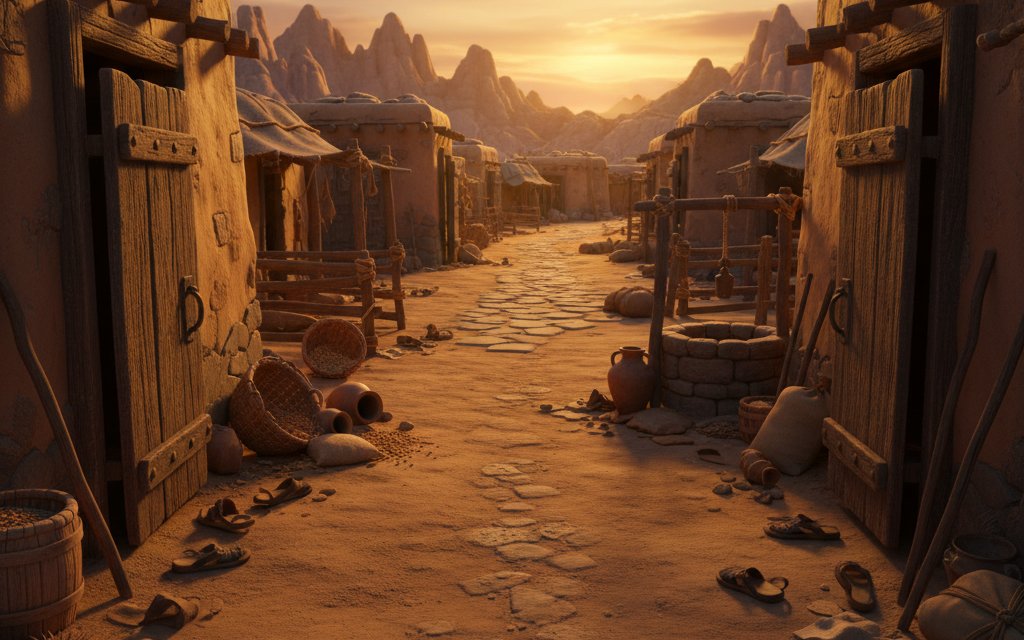
The Abandoned Settlement
Long ago, there was a large group of thousands of people who lived in a settlement. According to the account mentioned in Surah Al-Baqarah, these people grew worried about what might happen to them regarding their safety. They decided to leave their homes all at once because they feared death. The Quranic message here is powerful, showing that these individuals hoped that by running away, they could escape what Allah had decreed for them.
❓ Why did the people in the story leave their homes?
When they left, they left behind the spaces they once occupied. If a traveler had passed by that location at that time, they would have seen a place of complete stillness. The markets were silent, and the homes were empty. This part of the account teaches us that the physical places we build cannot protect us if we are trying to run outside of Allah's control. It is a moment of deep reflection on how human beings sometimes try to find strategies to avoid their destiny.
❓ What happened to the people after they were still in the wilderness?
The people had tried to find a place where they could be safe from the end of their lives, but they soon learned a very important lesson about the power of the Creator. No matter how far a person travels or how fast they run, they can never go outside of Allah’s knowledge. The Quran tells us that Allah told them to die, and in an instant, the entire group became still. This event serves as a clear sign that escape from Allah’s decree is impossible and that He has ultimate authority.
❓ What everyday sign shows Allah’s power to give life?
For a long period, there was no activity or signs of life in that place. The homes remained quiet, and the environment became still. Classical tafsir—which are the explanations provided by scholars—often connect these people and this period with a figure named Hizqil. It is important to note that the Quranic verses do not name a prophet in this specific passage, but historical reports link Hizqil with the people involved or the events that followed. This helps us understand the sequence of history as recorded by scholars.
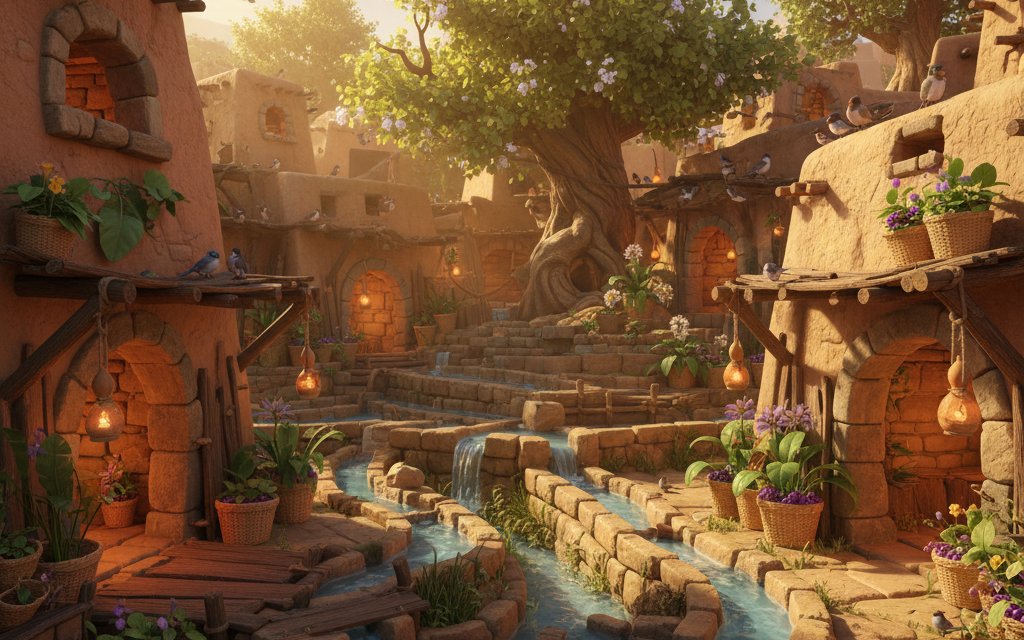
Life Returns
After this event took place, a significant sign of Allah’s power was demonstrated to show His ability to bring life back to what was once still. The Quran describes how Allah restored these thousands of people back to life. This was a demonstration of His generosity and a clear proof of the resurrection that all people will face. It showed that even though a large group had attempted to flee, their ultimate return was in the hands of their Creator.
❓ Does the Quran name Hizqil in the story of the thousands who fled?
Instead of focusing on the frightening aspects of death, we can think about the signs of life returning to a quiet place. Imagine a town that has been silent for a long time suddenly hearing the sounds of the world again. You might see the water beginning to flow in the streams once more, clear and refreshing. You might imagine the sight of lamps being relit in the windows, casting a gentle light across the reopened homes and streets that were once empty.
In this scene of restoration, nature itself seems to participate in the renewal. Animals that had stayed away might return to their familiar places, and green plants might start to sprout where the earth had been dry. The people were restored to their lives, serving as a living sign for all who would hear their story later. They learned through this experience that their existence is a gift and that the power over life belongs to Allah alone.
When we look at this event, we see why it is mentioned in the Quran as a sign for humanity. The classical identification connects Hizqil with this Quranic event, though the text itself focuses on the action of Allah. These scholars describe Hizqil as one of the prophets of Bani Isra’il, placing him in the timeline after the time of Yusha. While the exact dates are not claimed, the focus remains on the miracle of restoration performed by Allah.
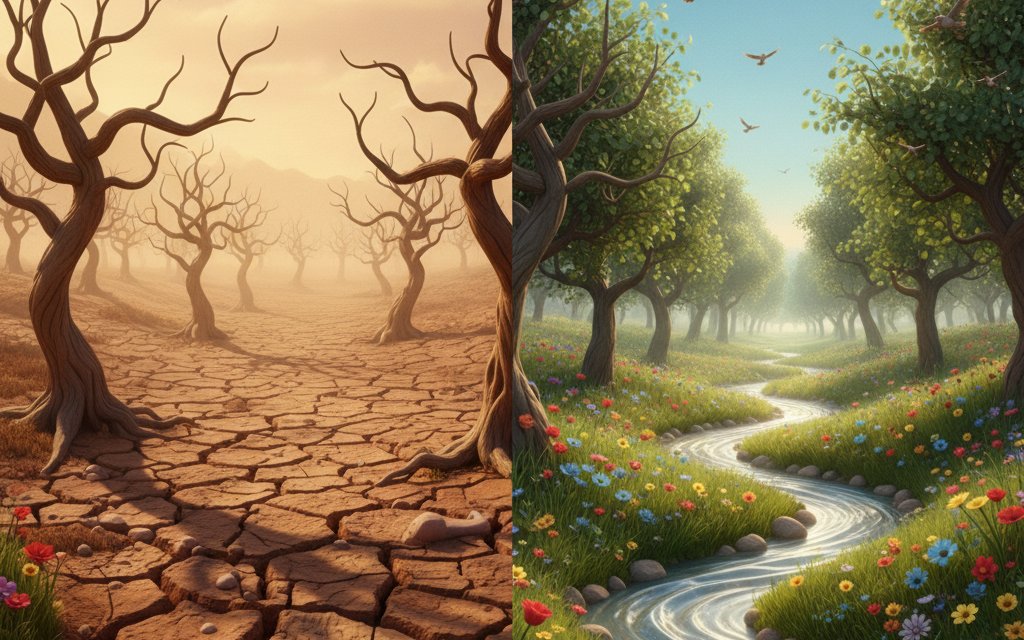
Dead Land, Living Land
The story of people being brought back to life is a major belief in Islam, though it can sometimes be difficult for us to imagine. To help us understand, the Quran repeatedly gives examples of how Allah revives things in the world we see every day. Think about a field during a very dry season. The grass might turn brown, the ground might become hard, and it looks as though nothing could ever grow there again.
It appears as if the land has lost its life. But then, by the decree of Allah, the rain falls. The water soaks into the earth, and soon, tiny green shoots begin to emerge. Within a short time, what looked like a dead field is filled with life and color. This cycle of nature is a constant reminder that Allah has the power to bring the dead back to life, just as He did for the people in the story connected to Hizqil.
This comparison helps children and adults alike to grasp the concept of the Day of Resurrection. Just as we see the land being revived after rain, we know that Allah can revive creation itself. The miracle described in Surah Al-Baqarah is a more sudden and extraordinary version of what we see in our gardens. It is a sign of Allah's power and a reason to have total confidence in His ability to fulfill His promises to us.
By observing these changes in the world, we develop a deeper sense of wonder. We learn that life and death are not random events, but are governed by the Creator. The connection scholars make between Hizqil and this event helps us organize our understanding of history, but the core lesson is always about Allah. When we see a beautiful green valley, we can remember that the same Power that grows the grass is the Power that restored the people.

Safety and Trust
One of the most important lessons from this story is the balance between taking precautions and having trust in Allah. Islam does not teach us to ignore danger or to be careless with our lives. In fact, we are encouraged to use the wisdom Allah gave us. This means wearing seatbelts, following safety rules, taking medicine when we are sick, and making wise plans for our future and our safety.
However, the story teaches us that fear should not become a belief that we can control everything through our own strategies alone. The people who fled their homes thought they could escape their destiny by simply changing their location. They forgot that no strategy makes a person independent of Allah. We must do our part by being safe, but we must also keep our hearts peaceful by knowing that Allah is the ultimate Protector.
This is a very healthy balance for a person to have. We prepare for our exams, we look both ways before crossing the street, and we listen to the advice of experts to stay healthy. These are all good things. But we also pray and recognize that our life is in Allah's hands. By doing this, we avoid the kind of overwhelming fear that leads people to try to run away from the decree of their Creator.
Hizqil is remembered in historical traditions as a teacher who helped people understand these truths. As a prophet of Bani Isra’il, his role was to guide people toward the correct belief. Even though not all details about his identity or exact timeline are certain, his connection to this story in classical tafsir serves as a reminder that Allah provides guidance to help humanity understand the balance of faith and wisdom.
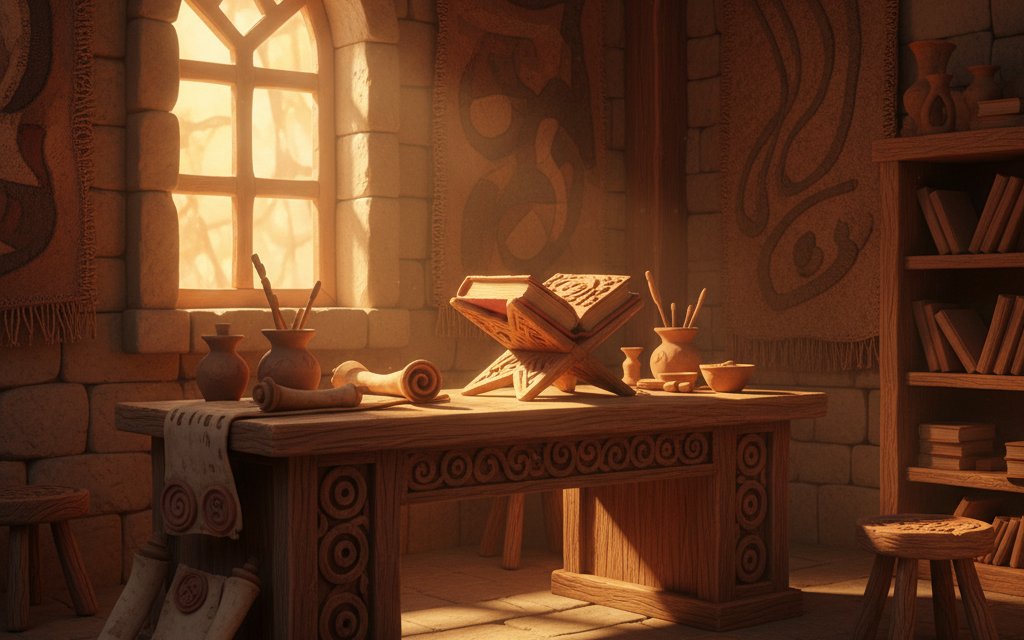
Source Label Scene
When we learn about figures like Hizqil, we must be careful to distinguish between different types of information. This is part of being a 'Source Detective.' We know for certain that the event of the mass restoration to life is in the Quran because we can read it in Surah Al-Baqarah. This is the primary source of the story and the message of Allah’s power over death.
At the same time, we acknowledge that the Quran does not name Hizqil in that specific passage. His name and his specific connection to the event come from classical tafsir and historical reports. By wording it carefully—saying that classical tafsir connects Hizqil with this event—we stay true to the facts while respecting the traditions of the scholars who studied these stories for centuries.
The miracle itself belongs to Allah. It is not described as a separate physical miracle performed by a person, but as an act of the Creator. This distinction matters because it keeps our focus on the fact that Allah is the Giver of Life. Whether we are discussing the historical context or the Quranic verses, the central theme is that human beings cannot run outside of Allah's control and that He is generous to His creation.
As we finish this study, we can reflect on how these accounts strengthen our faith. We learn to look at the world with eyes of faith, seeing signs of resurrection in the rain and the plants. We learn to be wise and safe in our daily lives while keeping our trust firmly in Allah. And we learn to value the work of scholars who help us connect the names of prophets like Hizqil to the powerful signs mentioned in the Holy Quran.
✨ Miracle Spotlight
The Qur’an describes Allah causing a large group to die and then restoring them to life. Classical tafsir connects Hizqil with this event, but the Qur’an itself does not name him there.
🌙 Pause & Imagine
Pause and imagine a silent, empty garden slowly turning bright green as the first drops of rain fall.
💡 Did You Know?
Classical tafsir connects Hizqil with a Quranic event, but the Quran itself does not name him in that passage.
🔤 Arabic Word Discovery
Tawakkul
trusting Allah after preparing
“I wear my seatbelt and have tawakkul.”
✨ Story questions: 0 / 4
🎓 What Did You Learn?
Finish the story first, then test what you learned.
Real-Life Mission
Choose one safety habit—seatbelt, helmet, medicine schedule, handwashing, or asking an adult for help—and practice it while remembering that taking precautions and trusting Allah belong together.
🛂 Finish reading to earn this stamp.
💡 What can we learn?
🏮 Trivia quiz
1. What were the people trying to escape?
2. Who restored them to life?
3. Is Hizqil named in the Qur’anic verse?
🖼 Picture match
Tap a word on the left, then its match on the right.
🧭 Order the story
Tap the events in the right order.
✅ What We Know for Certain
- ✦Surah Al-Baqarah describes the mass-death-and-restoration event.
- ✦The Qur’an does not name Hizqil in the passage.
- ✦Some classical scholars identify Hizqil as a prophet connected with the event.
- ✦The miracle belongs to Allah.
🔎 Source Detective
Which sentence is more accurate?
🧿 Hidden Object Scene
Look back through this chapter's pictures. Tap each thing when you spot it — some may be hiding, some may be missing!
🏅 Badge
🎯 Multiple choice
❓ What does the story teach?
⚖️ True or false
The Qur’an directly states, “Hizqil brought them back to life.”
🌱 Reflection: What can I learn?
What is one situation where you should both prepare carefully and trust Allah?
🌟 Famous Stories
The People Who Fled Death ❔ Traditional reportStory based on Qur'an 2:243, linked to Hizqil (peace be upon him) in classical tafsir (e.g., Ibn Kathir)
In a town of the Children of Israel, a terrible plague began to spread. Thousands of people became so scared of dying that they decided to run away. They abandoned their homes and fled to an open valley, thinking they could escape their fate and save themselves from the sickness. They did not put their trust in Allah's plan.
But no one can run from Allah's decree. As they gathered in the valley, Allah commanded them all, “Die!” And instantly, every single one of them fell down, lifeless. Their bodies remained in the valley for a long time, until they were nothing but scattered, dry bones. It was then that Allah sent the Prophet Hizqil (peace be upon him) to that same valley. Allah willed to show him, and all of humanity, an incredible sign of His power.
By Allah's command, Prophet Hizqil (peace be upon him) spoke to the bones. Miraculously, the bones began to rattle and fly through the air, each finding its correct place to form skeletons. Then, flesh, muscles, and skin grew over them. Finally, Allah breathed their souls back into their new bodies. The thousands of people stood up, alive once again, witnessing the absolute power of Allah to give life after death.
💡 Lesson: Only Allah has power over life and death, and no one can escape His divine plan.
❓ Quick questions
Question 1 / 3
Why did the people leave their homes?
The Man and the Ruined Town ❔ Traditional reportStory based on Qur'an 2:259; some scholars in classical tafsir suggest the man could be Hizqil (peace be upon him)
The Qur'an tells a story of a righteous man who was traveling. He passed by a town that was completely destroyed. Its buildings were in ruins and its people were gone. As he looked at the rubble, a thought crossed his mind: “How can Allah bring this to life after its death?” While Islamic scholars mention this could be Uzair or another pious man, some have suggested it was the Prophet Hizqil (peace be upon him).
To answer the man's question with a real-life proof, Allah caused him to die right there. He remained in that state for one hundred full years. His donkey, which was with him, also died and its body decomposed into bones. Amazingly, the basket of figs and the container of juice he was carrying remained perfectly fresh, as if no time had passed at all. This was a miracle from Allah to show that He has power over all things, including the process of decay.
After a century, Allah brought the man back to life and asked him, “How long have you stayed here?” The man, seeing the sun and feeling like he just woke from a nap, replied, “I have stayed a day or part of a day.” Allah then told him the truth: that he had been there for one hundred years. As a sign, Allah showed him his fresh food and then commanded the bones of his donkey to join together, be covered with flesh, and come back to life right before his eyes. The man then understood with full certainty Allah's limitless power over resurrection.
💡 Lesson: Allah can bring anything back to life, even after a very long time, to show us His power.
❓ Quick questions
Question 1 / 3
What did the man wonder when he saw the ruined town?
🤲 Prophetic Dua
No specific personal dua of this prophet is recorded in the Qur'an. We don't invent one — try the duas of other prophets!
📖 Sources
Al-Baqarah 2:243 (event); name from classical tafsir
👪 For parents & teachers
Sources: Al-Baqarah 2:243 (event); name from classical tafsir
Detail notes: Stories are based on the Qur'an first. Where a detail comes from hadith or later historical reports, the text says so. Please review with a trusted teacher.
Translations are provided for learning. For Qur'anic wording, refer to an approved Qur'an translation in your language.
These five chapters use a different source category from the 25 prophets named directly in the Qur’an. The app distinguishes Qur’anic text, authentic hadith, classical tafsir, Islamic historical tradition, and disputed reports so children learn both the stories and how religious knowledge is sourced.