
Prophet story 27 of 30
شمويل
Shamwil
peace be upon him
The Prophet Who Announced a King
✦ Additional Prophetic Figure — Islamic Tradition
Source: Qur’anic unnamed prophet + classical tafsir identification
✦ Step Into the Story
🔮 What Do You Already Know?
No pressure — just guess! This helps you see how much you grow.
A People Asking for Leadership
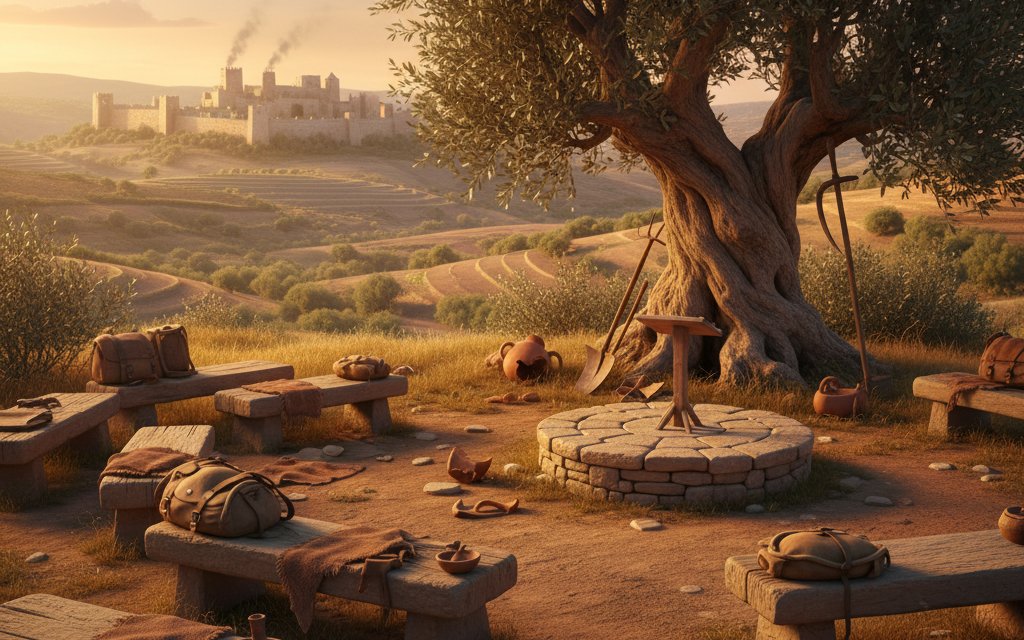
The Qur’an records a time in history concerning the people of Bani Isra’il who lived after the time of Prophet Musa. During this period, the people faced great difficulties, as they had been driven from their homes and separated from their children. They approached a prophet who lived among them with a specific request. They asked that a king be appointed for them so they could organize themselves and fight against those who had committed these injustices against them. This request sounded brave and firm, showing a desire to stand up for their rights and reclaim what they had lost.
❓ Why did the people approach their prophet for a king?
An important detail for every student of history to remember is that the Qur’an confirms the existence of this prophet but does not explicitly state his name within the text. The name Shamwil, which corresponds to Samuel, is identified through classical tafsir and Islamic historical tradition rather than the direct verses of the Qur’an. This teaches children a vital lesson in how we handle knowledge: we rely on the Qur’an for the core truth of the event while looking to scholars and traditional records to understand the specific names preserved in history. The presence of this prophet served as a guide for the people during a moment of deep national crisis.
❓ Why did some people object to Talut being king?
When the people made their request for a king, the prophet challenged them with a significant question. He asked what would happen if fighting were actually commanded of them and then they chose to refuse. The people insisted they would remain firm, pointing to the fact that they had been driven from their homes and separated from their families. They used their personal suffering as evidence of their determination. However, when the time for testing eventually came, many of them turned away. This part of the story reminds us that stating an intention is very different from following through when things become difficult.
❓ What did the Qur'an say carried the sacred chest?

The Choice of Talut
The prophet informed the people that Allah had appointed a man named Talut to be their king. This announcement was met with surprise and objection from some among the group. They looked at Talut and did not see what they expected a king to look like. Their main objection was based on his status; they pointed out that he was not the wealthiest man among them and he did not come from the kind of prestigious background they associated with royal leadership. They questioned how he could be king over them when they felt others might be more deserving based on money or social standing.
❓ What did the river test show about the soldiers?
This reaction provides a timeless lesson that is very important for children to learn today. People often judge leadership by shallow things like money, family names, physical appearance, popularity, or how famous someone is. We are taught that these are not the true measures of a person’s worth or their ability to carry responsibility. The prophet explained the reality of the situation: Allah had chosen Talut and increased him in two very specific and important ways. These two qualities were knowledge and physical ability. This teaches us that the best leaders are those who have the understanding to make good decisions and the strength to carry them out.
The lesson for kids is not that every strong or smart person should automatically lead. Instead, the lesson is that leadership should be connected to the specific qualities needed for the responsibility at hand, rather than shallow prestige or the amount of wealth a person has. By choosing Talut, a man without great riches, the story highlights that the criteria for success in the eyes of Allah are different from the criteria used by people who only look at the surface. Understanding this helps us value character and skill over status and money in our own lives.
The Returning Chest
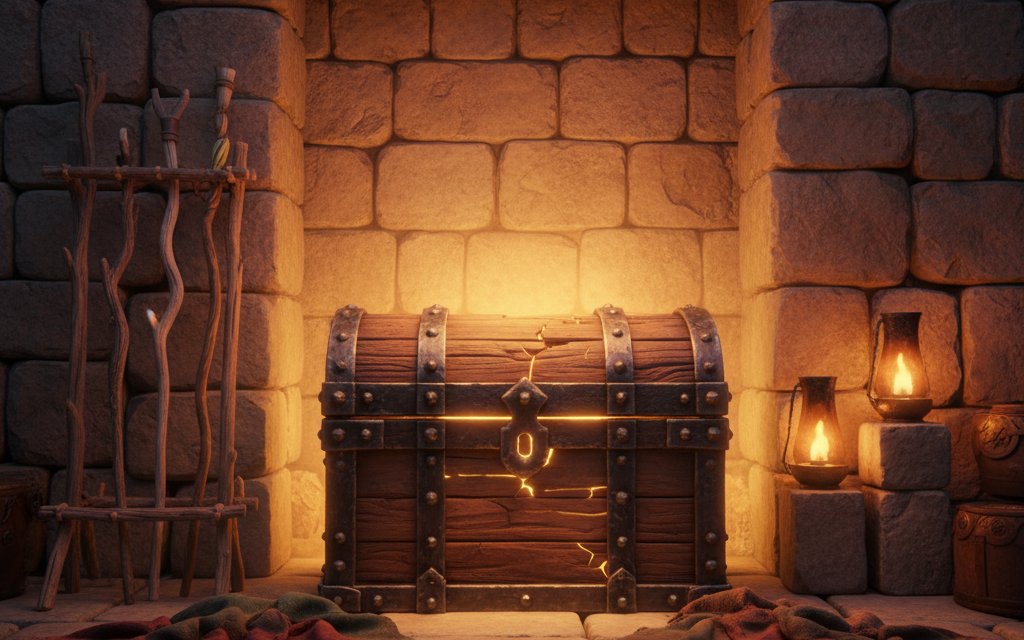
The Qur’an describes a specific sign that was given to the people to confirm Talut’s kingship and provide them with reassurance. This sign was the return of a sacred chest. This chest was not an ordinary object; it contained reassurance from their Lord and relics that were connected with the family of Prophet Musa and Prophet Harun. The return of these items was meant to be a clear proof that Talut was indeed the one appointed to lead them during this challenging time. It was a sign that could not be denied by those who were looking for the truth.
The description of how this chest returned is very unique. The Qur’an says that angels carried the chest back to the people. When we think about this scene, we should not imagine angels in the way they are often drawn in cartoons or as humans with wings. Instead, we understand from the text that their power was used to bring this sacred object back to the community as a miraculous sign. The arrival of the chest was a moment intended to bring peace to their hearts and help them move forward with confidence in the leadership that had been chosen for them.
The return of the chest serves as a reminder that Allah provides signs and support to those who follow His guidance. For the people of Bani Isra’il, this was a visible and undeniable confirmation of the prophet’s words. It showed that the appointment of Talut was not a random event or a human decision based on preference, but a divine appointment supported by a miracle. This helped the faithful members of the community prepare for the journey ahead, knowing that they were part of a plan that was much larger than themselves.

The River Test
After Talut was established as king, he led his army toward the challenge they had originally asked to face. During this journey, a very specific test occurred at a river. Talut informed his men that whoever drank freely from the water would not be allowed to continue with him. The only exception was for those who took just a small amount, the measure of a single scoop in their hand. This was a test of discipline, obedience, and self-control. It was a way to see who could manage their own desires when a command was given.
As the army reached the water, many of them failed the test. Despite the instruction, many of the men drank too much from the river. Only a small group of soldiers remained disciplined enough to follow the command and take only what was permitted. This moment in the story is excellent for children to reflect upon because it shows that the biggest group is not always the strongest or the best group. Being part of a majority does not mean that the majority is doing the right thing. True strength is often found in the small group that can control themselves.
Self-control is a quality that is needed in every part of life, whether one is a leader or a follower. By filtering the army through this test, Talut ensured that the people remaining with him were those who had the patience and the will to listen to guidance even when they were thirsty or tired. This reminds us that we should practice discipline in our daily lives, even in small things, so that we are ready for bigger responsibilities when they come. The quality of the people matters much more than the quantity of people when facing a difficult task.

Guidance Before the Battle
The smaller, faithful group that passed the river test eventually faced the forces led by Jalut. When they saw the size and strength of the opposing army, some members of the group felt a sense of fear. The enemy looked very large and powerful. However, the believers among them spoke words of encouragement. They noted how often in history a small group has overcome a larger one by the permission of Allah. This perspective shifted the focus from the number of soldiers to the power of faith and the reality of divine support.
Among this small, believing group was a young man named Dawud. During the encounter, it was Dawud who killed Jalut. This victory was a major turning point, and the Qur’an mentions that Dawud would later be granted both kingship and prophethood. This sequence of events shows how one step of obedience leads to another, and how those who remain steadfast in small groups can be the ones to achieve great things. The story that began with a request for a king ended with a victory that changed the course of their history.
In this entire episode, the role of the prophet, commonly identified as Shamwil, was to communicate the decisions of Allah and to teach the people how to understand true leadership. The Qur’an does not provide a long biography of his personal life, his childhood, or his private conversations. Instead, it focuses on his role as a messenger who guided his people through a test of faith, leadership, and discipline. By following the guidance he provided, the people were able to see the sign of the chest, pass the test of the river, and eventually find success through the bravery of Dawud.
✨ Miracle Spotlight
The Qur’an describes the return of the sacred chest as a sign of Talut’s kingship and says angels carried it. The prophet’s identity as Shamwil comes from classical tafsir, not from the Qur’anic text itself.
🌙 Pause & Imagine
Imagine a quiet, ancient wooden chest appearing surrounded by a soft, peaceful light.
💡 Did You Know?
The prophet's identity as Shamwil comes from classical tafsir, not from the Qur’anic text itself.
🔤 Arabic Word Discovery
Mas'uliyyah
responsibility
“Doing my job without being reminded is mas'uliyyah.”
✨ Story questions: 0 / 4
🎓 What Did You Learn?
Finish the story first, then test what you learned.
Real-Life Mission
Complete one responsibility today without being reminded.
🛂 Finish reading to earn this stamp.
💡 What can we learn?
🏮 Trivia quiz
1. Who was appointed king?
2. What quality did people wrongly use to judge leadership?
3. What test reduced Talut’s group?
🖼 Picture match
Tap a word on the left, then its match on the right.
🧭 Order the story
Tap the events in the right order.
✅ What We Know for Certain
- ✦The Qur’an says Bani Isra’il approached a prophet after Musa.
- ✦That prophet announced Talut’s appointment as king.
- ✦Classical tafsir commonly identifies the prophet as Shamwil / Samuel.
- ✦The name is not stated in the Qur’an.
🔎 Source Detective
Which part is from the Qur’an?
🧿 Hidden Object Scene
Look back through this chapter's pictures. Tap each thing when you spot it — some may be hiding, some may be missing!
🏅 Badge
🎯 Multiple choice
❓ The main lesson about leadership is:
⚖️ True or false
The Qur’an directly states that the prophet’s name was Shamwil.
🌱 Reflection: What can I learn?
Would you rather be chosen for leadership because you are popular or because you are prepared and trustworthy? Why?
🌟 Famous Stories
Asking for a King 📖 Qur'anAl-Baqarah 2:246
After the time of Prophet Musa, peace be upon him, the Children of Israel were in a difficult state. Their enemies had defeated them and taken their sacred Ark, the Tabut. Feeling weak, a group of their elders went to their prophet at the time, who tradition identifies as Shamwil, peace be upon him. They asked him, "Appoint for us a king, and we will fight in the way of Allah." They wanted a strong leader to unite them for battle.
The prophet Shamwil, peace be upon him, was wise and knew that people sometimes make promises they don't intend to keep. He asked them, "Perhaps if fighting is prescribed for you, you will not fight?" He wanted them to be sure about their commitment. But they insisted, explaining that they had been driven from their homes and separated from their families, so they had every reason to fight for Allah's cause.
Allah answered their prayer and the prophet's, but Allah also knew what was truly in their hearts. The Qur'an tells us that when fighting was finally commanded under their new king, most of the people who made the promise turned away, except for a small, faithful few. This story teaches us that making a promise to Allah is a serious matter that requires sincere action, not just words.
💡 Lesson: We should always be sincere in our promises to Allah and be prepared to follow through with action.
❓ Quick questions
Question 1 / 3
What did the Children of Israel ask their prophet to do?
The Sign of the Ark 📖 Qur'anAl-Baqarah 2:247-248
After the people asked for a king, their prophet, Shamwil, peace be upon him, announced Allah's choice. He told them, "Indeed, Allah has appointed Talut (Saul) as a king over you." However, the leaders among the people were not pleased. They complained because Talut was not a wealthy man, nor was he from a royal family line. They said, "How can he be king over us when we are more deserving... and he has not been given an abundance of wealth?"
The prophet, peace be upon him, explained to them that Allah does not choose leaders based on money or family name. He told them that Allah had chosen Talut and had blessed him with great knowledge and physical strength, making him fit to lead. He reminded them, "Allah gives His sovereignty to whom He wills." But the people were still doubtful and demanded a clear sign that Talut was indeed the king chosen by Allah.
So their prophet announced the miracle that Allah would send as proof. He said that the sign of Talut's kingship would be the return of the Ark of the Covenant (at-Tabut), which had been lost to their enemies. Inside the Ark was a special peace and tranquility (sakinah) from Allah, and relics from the families of Musa and Harun, peace be upon them, with the angels carrying it. When the Ark miraculously returned to them just as the prophet said, they finally accepted Talut as their king.
💡 Lesson: Allah chooses leaders based on wisdom and strength, not on wealth or social status.
❓ Quick questions
Question 1 / 3
Why did the people object to Talut being their king?
🤲 Prophetic Dua
No specific personal dua of this prophet is recorded in the Qur'an. We don't invent one — try the duas of other prophets!
📖 Sources
Al-Baqarah 2:246–251
👪 For parents & teachers
Sources: Al-Baqarah 2:246–251
Detail notes: Stories are based on the Qur'an first. Where a detail comes from hadith or later historical reports, the text says so. Please review with a trusted teacher.
Translations are provided for learning. For Qur'anic wording, refer to an approved Qur'an translation in your language.
These five chapters use a different source category from the 25 prophets named directly in the Qur’an. The app distinguishes Qur’anic text, authentic hadith, classical tafsir, Islamic historical tradition, and disputed reports so children learn both the stories and how religious knowledge is sourced.