
Prophet story 5 of 30
صالح
Salih
peace be upon him
The She-Camel and the Test of Responsibility
✦ Step Into the Story
🔮 What Do You Already Know?
No pressure — just guess! This helps you see how much you grow.
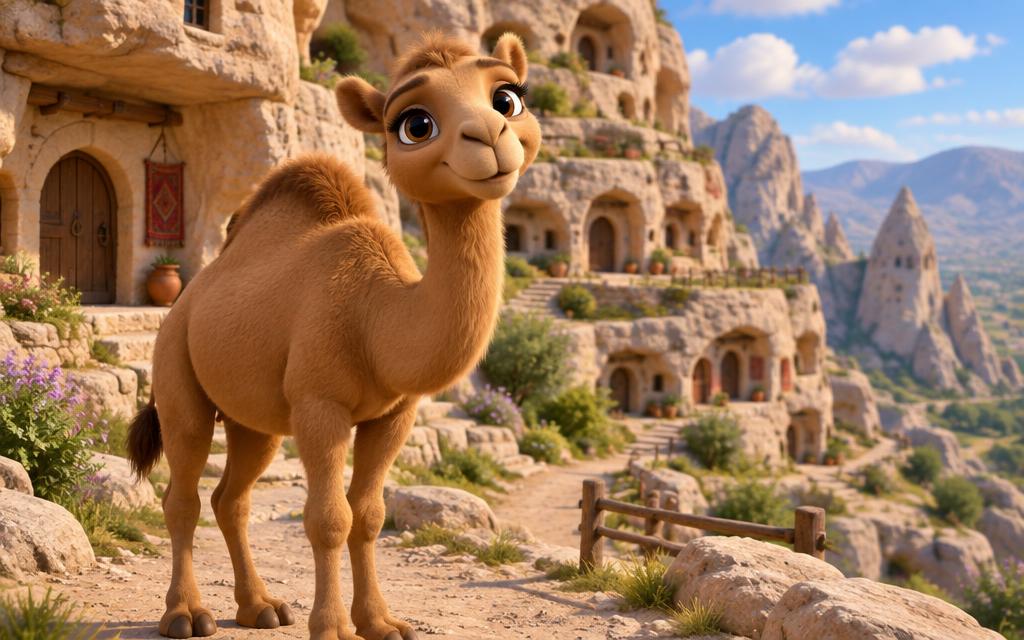
Salih was sent to Thamud, a people known for carving impressive homes into mountains and rock. The Qur’an repeatedly points to their skill and settled life. Like ‘Ad before them, Thamud had received many blessings. Yet blessings can become a test when people forget the One who gave them.
❓ Where did the people of Thamud build their homes?
Salih came from among them. He called them to worship Allah alone. At first, some people seemed to have respected him and expected much from him. But when he challenged their idolatry, those expectations changed. They asked why he was telling them to leave what their ancestors worshiped.
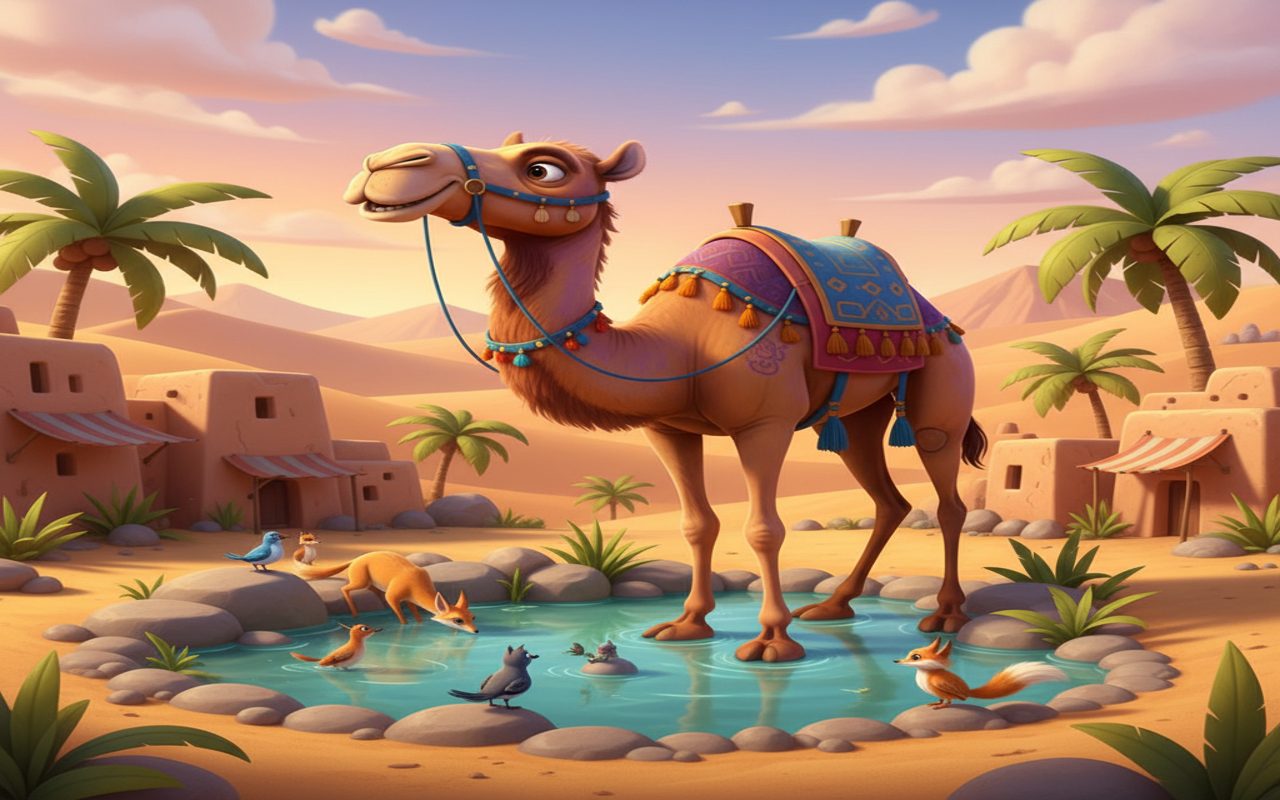
Allah gave Thamud a clear sign: the she-camel. The Qur’an describes her as Allah’s she-camel and a sign for them. Salih warned the people not to harm her. She had a designated right to water, and the people had theirs on another day. The exact physical appearance of the camel, her size, and many dramatic details commonly repeated in popular stories are not all stated in the Qur’an. The safest storytelling approach is to focus on the sign and the command.
❓ What special sign did Allah send to Thamud?
Instead of respecting the sign, arrogant members of the community plotted against it. The camel was hamstrung and killed. Salih warned them that they had only a short time before the promised punishment.
❓ What happened to the she-camel?
The story then becomes a lesson in what happens when people demand proof but decide in advance that they will not accept it. Thamud had asked for a sign. When the sign came, the problem was not lack of evidence. The problem was pride and rebellion.
The Qur’an describes different aspects of the punishment in different passages: a terrible blast, an earthquake, and a thunderous cry. These descriptions together communicate sudden, overwhelming destruction. Salih and the believers were rescued.
❓ What happened to Salih and the believers during the punishment?
For illustrations, use the remarkable environment of Thamud: rose-colored cliffs, ancient carved façades, a watering place, a calm she-camel near the well, warning clouds in the sky, and empty rock-cut homes after the punishment. No prophet should appear in the scene.
The miracle spotlight centers on the she-camel as a sign from Allah. Children can think about the idea of a “test hidden inside a gift.” The people had water, land, homes, and a visible sign. Yet they still had to choose whether to obey.
Another powerful theme is responsibility toward animals. The camel was not to be abused. Although the story’s main issue was rebellion against Allah’s sign, it can also remind children that animals are not toys to be harmed.

The Qur’an does not give us a full biography of Salih’s childhood, family, or daily life. It gives us his mission, the sign, the people’s response, and the consequence. That is enough for a meaningful chapter.
An interactive “decision path” can ask the reader: If you see everyone else breaking a rule, what should you do? If a friend tells you, “Everyone is doing it,” does that make it right? Salih’s story shows that a crowd can be wrong.
A second activity can invite children to design a paper “rock city” using folded shapes. Each house can carry one word: gratitude, honesty, kindness, prayer, patience. The point is that strong homes need strong values.
Salih’s chapter ends with a sobering picture: magnificent homes still standing while the people who boasted in them were gone. Stone can last longer than human pride. What matters most is not what we build around us, but what we build inside our hearts.
❓ What lasted longer than the pride of Thamud?
The message for young readers is simple and memorable: **When Allah gives a sign, a blessing, or a command, respond with humility instead of pride.**
✨ Miracle Spotlight
The she-camel was a clear sign from Allah to Thamud. The sign came with a command to respect her and her access to water.
🌙 Pause & Imagine
Close your eyes for ten seconds and imagine the environment from this story without imagining the prophet’s appearance. What do you hear: wind, animals, water, tools, footsteps, or a busy marketplace? What colors would the sky, stone, sand, wood, or plants have looked like? The goal is to enter the setting while keeping the prophet respectfully unseen.
💡 Did You Know?
Prophetic stories in the Qur’an are not arranged as one ordinary history textbook. The same prophet may appear in several surahs, with each passage highlighting a different lesson. That is why good storytelling should connect verses carefully instead of pretending every detail appears in one place.
🔤 Arabic Word Discovery
Amanah
a trust you must look after
“Looking after my friend's toy is an amanah.”
✨ Story questions: 0 / 5
🎓 What Did You Learn?
Finish the story first, then test what you learned.
Real-Life Mission
Show kindness to an animal safely.
🛂 Finish reading to earn this stamp.
💡 What can we learn?
🏮 Trivia quiz
1. Salih was sent to which people?
2. What special sign was given?
3. What instruction were the people given?
4. What lesson does the story teach about animals?
5. What were Thamud known for building?
🖼 Picture match
Tap a word on the left, then its match on the right.
🧭 Order the story
Tap the events in the right order.
🧩 Think about it
Match each responsibility with the right action: pet → water and care; library book → return it; shared playground → keep it clean; promise → keep it.
🎯 Multiple choice
❓ How did the people of Thamud share water with the she-camel?
⚖️ True or false
The Qur’an provides a detailed physical description of the she-camel's size and color.
🔍 Find the clue
🌱 Reflection: What can I learn?
“From Salih, I want to practice…”
🌟 Famous Stories
The She-Camel's Turn to Drink 📖 Qur'anAsh-Shu'ara 26:155-156, Al-Qamar 54:27-28
When Allah sent the giant she-camel to the people of Thamud as a special sign, He also gave them a very important rule. Prophet Salih, peace be upon him, delivered this message to his people. He told them that this camel was a test for them from Allah, and they were to let her graze freely in Allah's land and not harm her.
The test involved sharing the most precious resource in the desert: water. Prophet Salih (peace be upon him) explained the system Allah had commanded. The she-camel would have her turn to drink from their well on one day, and the people of the city would have their turn to drink and collect water on the next day. Everyone had a known, appointed time for drinking.
For a while, the people followed this rule. On the camel's day, she would drink her fill, and on the people's day, they would gather all the water they needed for themselves and their animals. This arrangement was a test of their patience, fairness, and obedience to Allah's command. It was a chance for them to prove they were grateful for the miracle they had been given, but many of them grew arrogant and impatient.
💡 Lesson: We must be fair and share the blessings Allah gives us, even when it is a test of our patience.
❓ Quick questions
Question 1 / 3
What was the special rule about the she-camel and the well?
The Cruel Plot Against the Camel 📖 Qur'anAsh-Shams 91:11-14, Al-A'raf 7:77
The people of Thamud became arrogant. They hated sharing their water and saw the she-camel as a burden, not a blessing. The disbelieving leaders among them began to plot against the magnificent animal that Allah had sent. They did not listen to the guidance of Prophet Salih, peace be upon him, and instead, they encouraged each other in their evil plan.
Prophet Salih (peace be upon him) had given them a very clear and serious warning from Allah: "Do not harm her, or a painful punishment will seize you." Despite this, they decided to disobey. The Qur'an tells us that the most wicked man among them volunteered to carry out the terrible act, and the others encouraged him to do it. He was not acting alone but had the support of other disbelievers.
This man went and cruelly hamstrung the camel, which means he cut the tendons in her legs so she could not stand. After they had committed this awful crime, they went to Prophet Salih (peace be upon him) and arrogantly challenged him, saying he should bring the punishment he had warned them about if he was truly one of Allah's messengers. Their act of cruelty and defiance sealed their doom.
💡 Lesson: Disobeying Allah's clear commands, especially when showing cruelty to His creation, leads to terrible consequences.
❓ Quick questions
Question 1 / 3
What did Prophet Salih (peace be upon him) warn his people would happen if they harmed the camel?
🤲 Prophetic Dua
No specific personal dua of this prophet is recorded in the Qur'an. We don't invent one — try the duas of other prophets!
📖 Where Is This Story in the Qur'an?
👪 For parents & teachers
Qur'an references: Al-A‘raf 7:73–79; Hud 11:61–68; Ash-Shams 91:11–15
Detail notes: Stories are based on the Qur'an first. Where a detail comes from hadith or later historical reports, the text says so. Please review with a trusted teacher.
Translations are provided for learning. For Qur'anic wording, refer to an approved Qur'an translation in your language.