
Prophet story 6 of 30
إبراهيم
Ibrahim
peace be upon him
Searching for Truth and Building a Legacy of Faith
✦ Step Into the Story
🔮 What Do You Already Know?
No pressure — just guess! This helps you see how much you grow.

Ibrahim’s story stretches across many Qur’anic chapters and is one of the richest prophetic stories in Islam. He is described as a model of faith, a sincere man, and a close friend of Allah. His life teaches children how to think, question false ideas, trust Allah, welcome guests, and put obedience above fear.
Ibrahim grew up among people who worshiped idols. The Qur’an shows him challenging the logic of worshiping things that could not hear, speak, or benefit anyone. In one famous episode, he broke the idols except the largest one. When the people demanded an explanation, he forced them to confront the obvious weakness of their idols. Deep down, they knew these objects could not respond.
❓ Why did Ibrahim break the idols?
Instead of accepting the truth, they decided to punish Ibrahim by throwing him into a great fire. Allah commanded the fire to be cool and safe for Ibrahim. This is one of his most famous miracles: the fire did not burn him because Allah protected him.
❓ What did Allah command the fire to be?
The Qur’an also describes Ibrahim reflecting on a star, the moon, and the sun in a way that exposed the weakness of worshiping created things that rise and set. He declared his devotion to the One who created the heavens and the earth. Children can learn that Islam encourages thoughtful belief, not blind attachment to objects, trends, or customs.
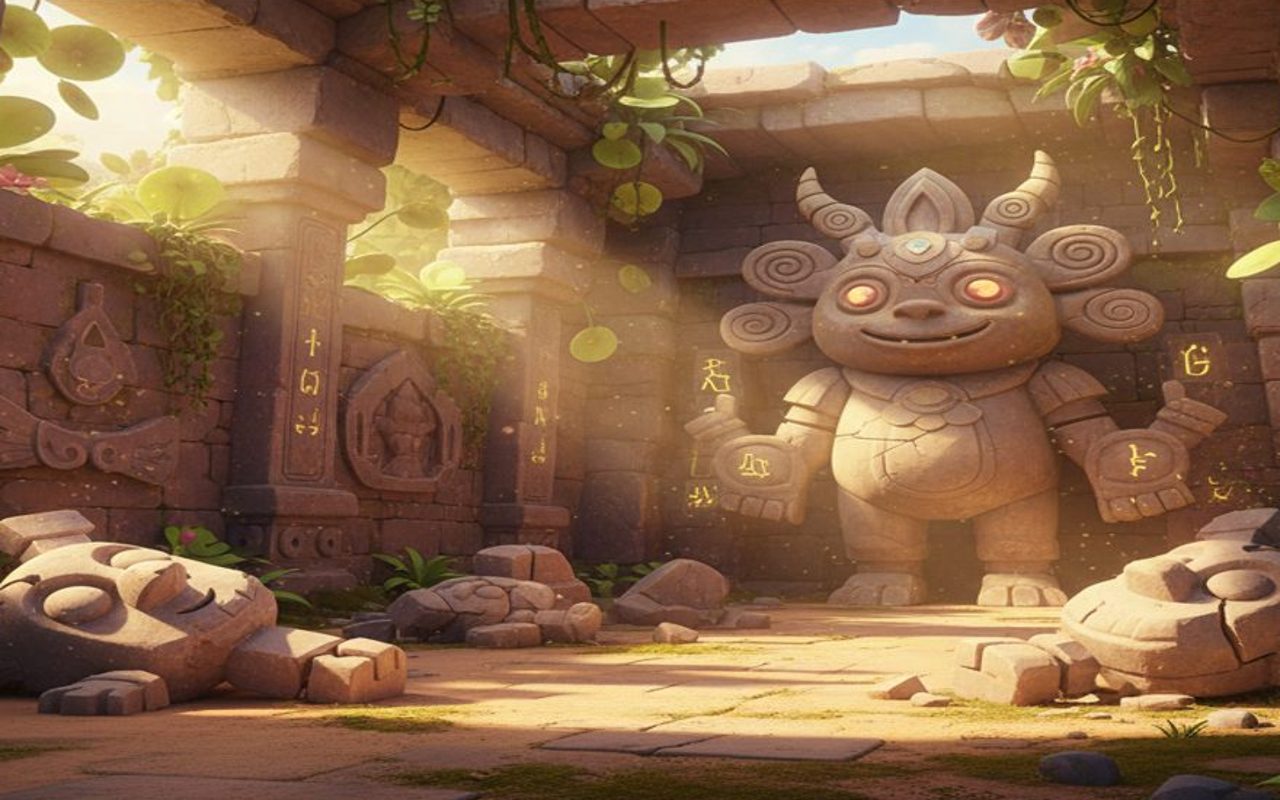
Ibrahim later migrated for the sake of Allah. His life included journeys, family tests, and extraordinary acts of trust. Allah gave him glad tidings of sons, including Ishaq. Angels visited Ibrahim in human form before going on to the people of Lut. Ibrahim welcomed his guests generously, bringing food quickly. When they did not eat, he felt concern, but they reassured him and delivered their news.
❓ How did Ibrahim treat his unknown guests?
One of the most moving parts of Ibrahim’s story involves the dream in which he saw himself sacrificing his son. The Qur’an does not name the son in that passage. Islamic tradition overwhelmingly associates the son with Ismail, though the Qur’anic text itself leaves him unnamed there. Ibrahim discussed the dream with his son rather than treating him as an object. The son responded with obedience and patience. When they both submitted to Allah, Allah ransomed the son with a great sacrifice. The test was not about Allah needing blood or suffering. It was about surrendering what was most precious when Allah commands.
Ibrahim and Ismail later raised the foundations of the Ka‘bah. As they worked, they prayed that Allah would accept from them. This is a beautiful detail: even while doing a great act of worship, they did not become proud. They asked for acceptance.
❓ What did Ibrahim and Ismail build together?
Ibrahim also prayed for Makkah to be a safe land and for his descendants. His story therefore connects directly to the later mission of Prophet Muhammad ﷺ, who came from the descendants of Ismail.
Another Qur’anic episode tells of Ibrahim asking Allah how the dead are brought back to life. Allah asked whether he believed. Ibrahim said yes, but wanted reassurance for his heart. He was instructed in a sign involving birds, showing that asking for deeper understanding is not the same as disbelief.
❓ What animals were involved in the sign about life after death?
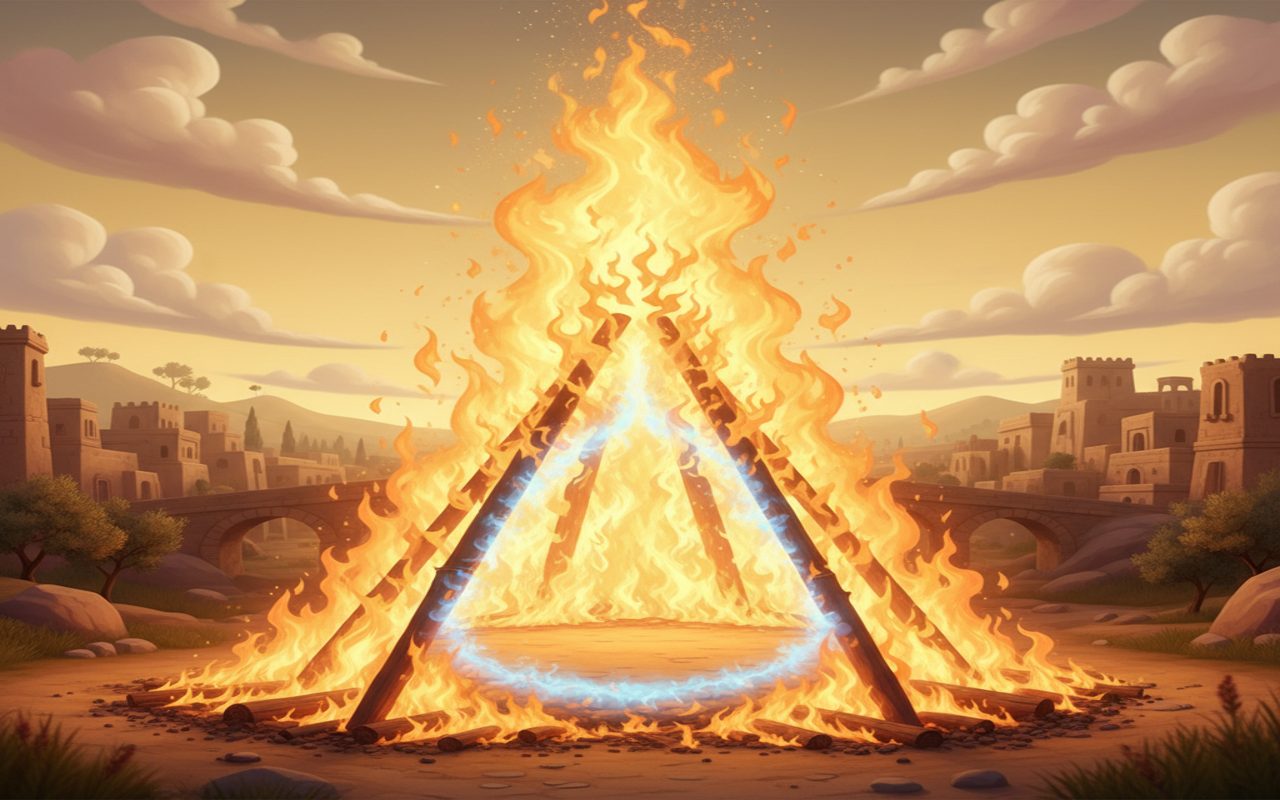
The miracle spotlight can include the fire becoming safe, the glad tidings of children in old age, and the sign of the birds. Each miracle should be framed as an act of Allah’s power.
For pictures, show an ancient idol workshop with broken stone idols; a huge fire cooling into peaceful light without showing Ibrahim; a desert journey under stars; a welcoming tent with food prepared for mysterious guests; the Ka‘bah’s early stone foundations with tools resting nearby; and a sacrificial ram in a peaceful valley after the test.
Interactive trivia can ask children to match scenes with lessons: fire → trust; guests → generosity; Ka‘bah → worship; idols → thinking clearly; sacrifice → obedience.
Ibrahim’s story is fun to read because it contains travel, debate, danger, family, hospitality, building, prayer, and miracles. But its heart is one sentence: Ibrahim turned fully toward Allah. He did not let family tradition, public pressure, fear, or comfort decide what was true.
For children, that can become a practical rule: ask good questions, be respectful, think carefully, worship Allah alone, welcome guests, keep promises, and trust Allah when doing the right thing feels difficult.
✨ Miracle Spotlight
Allah made the fire cool and safe for Ibrahim. Allah also gave signs connected to the birds and granted children in old age.
🌙 Pause & Imagine
Close your eyes for ten seconds and imagine the environment from this story without imagining the prophet’s appearance. What do you hear: wind, animals, water, tools, footsteps, or a busy marketplace? What colors would the sky, stone, sand, wood, or plants have looked like? The goal is to enter the setting while keeping the prophet respectfully unseen.
💡 Did You Know?
Prophetic stories in the Qur’an are not arranged as one ordinary history textbook. The same prophet may appear in several surahs, with each passage highlighting a different lesson. That is why good storytelling should connect verses carefully instead of pretending every detail appears in one place.
🔤 Arabic Word Discovery
Tawakkul
trusting and relying on Allah
“I study hard, then I have tawakkul for the test.”
✨ Story questions: 0 / 5
🎓 What Did You Learn?
Finish the story first, then test what you learned.
Real-Life Mission
Make dua for someone before bed.
🛂 Finish reading to earn this stamp.
💡 What can we learn?
🏮 Trivia quiz
1. What did Ibrahim teach about stars, moon, and sun?
2. What happened when Ibrahim was thrown into the fire?
3. Who helped raise the foundations of the Ka‘bah?
4. What did Ibrahim ask after doing good work?
5. What character quality appears again and again in his story?
🖼 Picture match
Tap a word on the left, then its match on the right.
🧭 Order the story
Tap the events in the right order.
🧩 Think about it
“True or Created?” Sort stars, sun, moon, stone, trees, animals into “created by Allah” and place “Allah alone is worshipped” as the central answer.
🎯 Multiple choice
❓ When Ibrahim and Ismail were building the Ka‘bah, what did they pray for?
⚖️ True or false
The Qur’an explicitly names Ismail as the son in the sacrifice story.
🔍 Find the clue
🌱 Reflection: What can I learn?
“From Ibrahim, I want to practice…”
🌟 Famous Stories
The Argument with the Arrogant King 📖 Qur'anAl-Baqarah 2:258
Once, Prophet Ibrahim, peace be upon him, had a discussion with a very powerful and arrogant king. This king was so proud that he thought he had power over life and death, just like Allah. When Prophet Ibrahim, peace be upon him, told him about the one true God, his Lord who gives life and causes death, the king boasted, "I give life and cause death!" To "prove" it, he brought two prisoners. He set one free and had the other one executed, foolishly thinking this made him like God.
Prophet Ibrahim, peace be upon him, knew this was just a trick and not real power. So, he presented the king with a challenge that no human could ever meet. He said that his Lord, Allah, makes the sun rise from the east every single morning. Then, he calmly asked the arrogant king to use his so-called power to make the sun rise from the west instead. It was a simple, logical, and brilliant challenge.
The king was left completely speechless. He stared in defeat, knowing he had no control over the sun, the moon, or the planets. He could not answer because the truth was too clear. This event showed that only Allah has true, ultimate power over the entire universe. Prophet Ibrahim, peace be upon him, used wisdom to prove the truth and show the weakness of the king's false claim.
💡 Lesson: True power belongs only to Allah, and we can use wisdom and logic to show people the truth.
❓ Quick questions
Question 1 / 3
What did the arrogant king claim he could do?
The Four Birds and the Power of Allah 📖 Qur'anAl-Baqarah 2:260
Prophet Ibrahim, peace be upon him, had complete faith in Allah's power. One day, to make his heart even more sure and to witness Allah's greatness firsthand, he made a special request. He said, "My Lord, show me how You give life to the dead." Allah asked him if he did not already believe. Prophet Ibrahim, peace be upon him, replied that he certainly did believe, but he wished to see it happen to make his heart completely at ease.
Allah answered his prayer with a powerful lesson. He instructed Prophet Ibrahim, peace be upon him, to take four birds, tame them so they knew him, and then cut them into pieces. After that, he was to place a piece of them on separate hills. This must have been a very strange instruction, but Prophet Ibrahim, peace be upon him, had perfect trust in Allah and followed the command exactly as he was told.
Then, Allah told him, "Now, call them to you." When Prophet Ibrahim, peace be upon him, called out to the birds, a miracle happened. The separate pieces flew from the different hilltops, joined back together in the air, and the four birds became whole and alive again. They immediately flew back to Prophet Ibrahim, peace be upon him, just as he had trained them. This amazing sign showed him the absolute power Allah has to bring anything back to life.
💡 Lesson: Allah has the power to bring everything back to life, and asking sincere questions can strengthen our faith.
❓ Quick questions
Question 1 / 3
Why did Prophet Ibrahim, peace be upon him, ask to see Allah bring the dead to life?
🤲 Prophetic Dua
رَبِّ ٱجْعَلْنِى مُقِيمَ ٱلصَّلَوٰةِ وَمِن ذُرِّيَّتِى ۚ رَبَّنَا وَتَقَبَّلْ دُعَآءِ
Transliteration: Rabbij 'alnee muqeemas Salaati wa min zurriyyatee Rabbanaa wa taqabbal du'aaa'
Meaning: My Lord, make me an establisher of prayer, and [many] from my descendants. Our Lord, and accept my supplication.
Who said it: Ibrahim · Ibrahim 14:40
رَبَّنَا ٱغْفِرْ لِى وَلِوَٰلِدَىَّ وَلِلْمُؤْمِنِينَ يَوْمَ يَقُومُ ٱلْحِسَابُ
Transliteration: Rabbanagh fir lee wa liwaalidaiya wa lilmu'mineena Yawma yaqoomul hisaab
Meaning: Our Lord, forgive me and my parents and the believers the Day the account is established."
Who said it: Ibrahim · Ibrahim 14:41
📖 Where Is This Story in the Qur'an?
سُورَةُ الأَنۡعَامِ
Al-An'aam 6:74–83
The Cattle · Read in Qur'an Explorer →
سُورَةُ الأَنبِيَاءِ
Al-Anbiyaa 21:51–70
The Prophets · Read in Qur'an Explorer →
سُورَةُ الصَّافَّاتِ
As-Saaffaat 37:83–113
Those drawn up in Ranks · Read in Qur'an Explorer →
سُورَةُ البَقَرَةِ
Al-Baqara 2:124–129
The Cow · Read in Qur'an Explorer →
👪 For parents & teachers
Qur'an references: Al-An‘am 6:74–83; Al-Anbiya 21:51–70; As-Saffat 37:83–113; Al-Baqarah 2:124–129
Detail notes: Stories are based on the Qur'an first. Where a detail comes from hadith or later historical reports, the text says so. Please review with a trusted teacher.
Translations are provided for learning. For Qur'anic wording, refer to an approved Qur'an translation in your language.