
🧭 Learning Adventure — not a prophet chapter
Chapter 33 · 🕋
The Ka‘bah Through the Prophetic Story
The Sacred House: A Journey Through Time
The Foundation of Faith
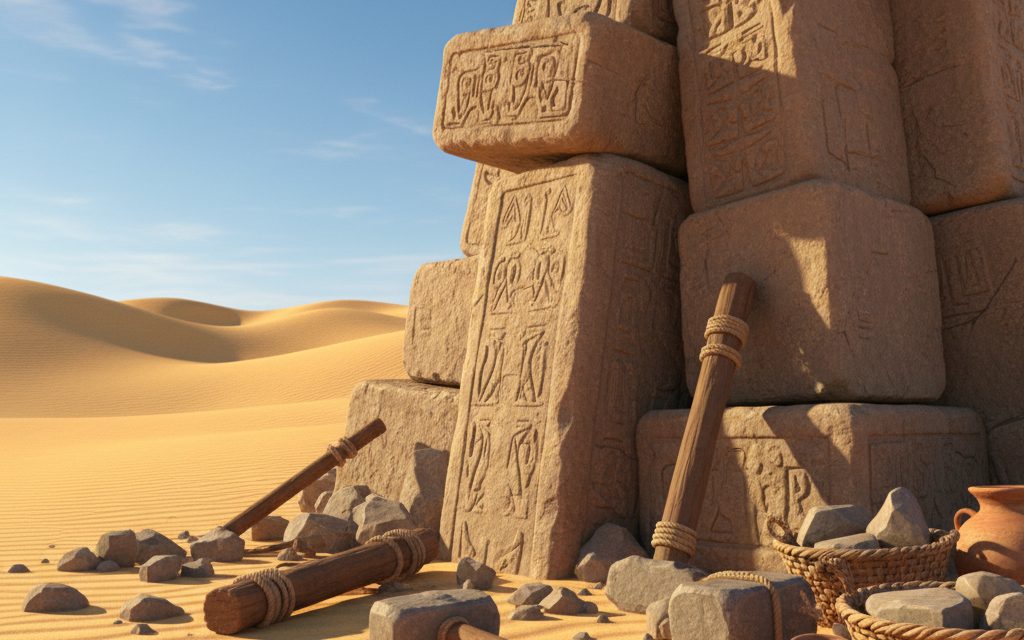
Long ago, in a valley without grass or trees, a great command was given. The Prophet Ibrahim (peace be upon him) and his son Ismail (peace be upon him) were chosen by Allah to raise the foundations of the Ka‘bah. As they placed stone upon stone, they prayed for their work to be accepted and for a righteous community to rise from that very spot. This structure was not built for a king or a tribe, but as the very first house of worship established for all mankind to praise Allah alone.
The Qur'an tells us that Ibrahim (peace be upon him) called out to the people to perform Hajj, the pilgrimage. Even though the valley was quiet then, Allah promised that people would come from every deep mountain pass, traveling on foot and on lean camels. The Ka‘bah stands as a symbol of 'Tawhid'—the oneness of Allah—reminding every visitor that we all serve the same Creator, no matter where we come from.
❓ Who were the two prophets who built the foundations?
A Sanctuary for All
For centuries, the Ka‘bah remained a focal point for the Arabs. Even before the mission of the Prophet Muhammad ﷺ, the Quraysh tribe took great pride in being the guardians of the Sacred House. They provided water and food to the pilgrims. However, over time, people began to forget the message of Ibrahim (peace be upon him) and placed idols around the building. Yet, the honor of the Ka‘bah remained so great that even the enemies of Islam respected its sanctity as a place where no blood should be shed.
When the Prophet Muhammad ﷺ was a young man, a great flood damaged the Ka‘bah. The tribes of Makkah argued over who would have the honor of placing the Black Stone (al-Hajar al-Aswad) back in its corner. Through his wisdom, the Prophet ﷺ placed the stone on a cloth and had every tribe leader hold a corner, bringing them together in peace. This showed how the Ka‘bah has always been a place meant to unite the hearts of the believers.
🤔 Stop and Think
If the Ka‘bah is a place where everyone is equal, how should we treat other Muslims we meet in our daily lives?
❓ What did the Prophet ﷺ use to help the tribes move the Black Stone?
The Qibla and the Return
In the early days of Islam, the Muslims faced toward Masjid al-Aqsa in Jerusalem to pray. However, the Prophet Muhammad ﷺ often looked toward the sky, longing to face the Ka‘bah built by his forefather Ibrahim (peace be upon him). Allah heard his silent prayer and revealed the command to change the Qibla. From that moment on, every Muslim in every corner of the world turns their face toward the Ka‘bah five times a day, creating a beautiful circle of worship around the globe.
When the Prophet Muhammad ﷺ eventually returned to Makkah in victory, he did not seek revenge. Instead, he purified the Ka‘bah of all idols, returning it to the pure worship of Allah as Ibrahim (peace be upon him) had intended. He stood at its door and proclaimed the equality of all people, teaching us that the Ka‘bah is a place of humility, where the rich and the poor stand side by side in identical white clothes during Hajj.
❓ Where did Muslims face for prayer before the Ka‘bah?
The Architecture of History
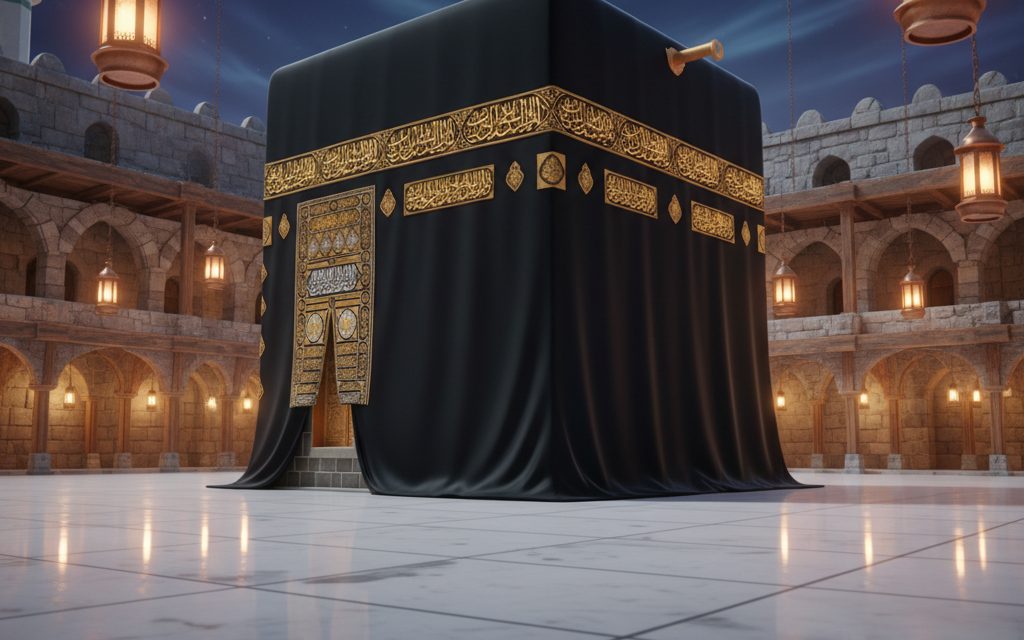
The Ka‘bah we see today has been repaired and rebuilt several times throughout history due to fire, floods, and natural wear. While the exact measurements and the specific stones used have changed across the centuries, the location and the spiritual foundation remain exactly where Allah commanded. Historical accounts mention different materials being used, from local granite to marble and wood for the ceiling, showing how every generation wanted to offer their best for the House of Allah.
💡 Did You Know?
The Ka‘bah was not always a cube shape; it was originally rectangular and included the area now known as the Hijr Ismail.
One unique feature is the 'Hatim' or 'Hijr Ismail,' the semi-circular wall next to the Ka‘bah. Scholars explain that this area was originally part of the Ka‘bah's internal structure when Ibrahim (peace be upon him) built it, but when the Quraysh rebuilt it during the Prophet's ﷺ lifetime, they ran out of pure funds and had to leave that section outside the main walls. Praying inside the Hatim is considered like praying inside the Ka‘bah itself.
❓ Why is the 'Hatim' (semi-circle wall) important?
The Heartbeat of the Ummah
Today, the Ka‘bah is covered by the 'Kiswa,' a magnificent black silk cloth embroidered with verses of the Qur'an in gold and silver thread. Every year, millions of people perform 'Tawaf,' circling the Ka‘bah seven times. This movement mimics the order of the universe, where everything from tiny atoms to giant planets orbits a center. For a Muslim, the Ka‘bah is not just a building; it is the heart of our community and a connection to our prophetic past.
As you look at the Ka‘bah, remember that you are standing where the Prophets stood. You are following the path of Ibrahim, Ismail, and Muhammad ﷺ. It serves as a permanent reminder that no matter how much the world changes, the truth of Allah’s oneness remains firm and unmoving, like the ancient stones of the Sacred House.
🔎 Source Check
The building by Ibrahim and Ismail is from the Qur'an. The story of the Black Stone and the change of Qibla are from authentic Hadith and Seerah. Details about the building materials and specific reconstruction dates are based on recorded history and may vary slightly in different chronicles.
✨ Story questions: 0 / 4
💡 What can we learn?
🏮 Trivia quiz
1. What is the name of the special black cloth that covers the Ka‘bah?
2. How many times do pilgrims circle the Ka‘bah during Tawaf?
3. What does the word 'Tawhid' mean?
🖼 Picture match
Tap a word on the left, then its match on the right.
🧭 Order the story
Tap the events in the right order.
🎯 Multiple choice
❓ Which Prophet is known for making the universal call to Hajj?
⚖️ True or false
The Ka‘bah has been in the same location since the time of Ibrahim (as).
🔍 Find the clue
🌱 Reflection: What can I learn?
The Ka‘bah is a symbol of unity. Even though we live in different countries and speak different languages, we all face the same point. This shows that in the eyes of Allah, the hearts of the believers are one.
🗣 Teach it back
Can you explain to your family why the Ka‘bah is called the 'First House' and how the Prophet Muhammad ﷺ helped bring peace when it was being rebuilt?
📖 Find it in the Qur'an
2:125-127, 22:26-27, 3:96