
🧭 Learning Adventure — not a prophet chapter
Chapter 41 · 🐘
The Companions of the Elephant
The Year of the Elephant and the Sacred House
The Powerful King from the South
In a land called Yemen, there lived a powerful ruler named Abrahah. He had built a massive, glittering church decorated with gold and jewels to attract people, but he grew angry when the people continued to travel to Makkah to visit the Ka‘bah. The Ka‘bah was a simple, sacred house built by Prophet Ibrahim peace be upon him and his son, but to the believers, it was the most important place on Earth.
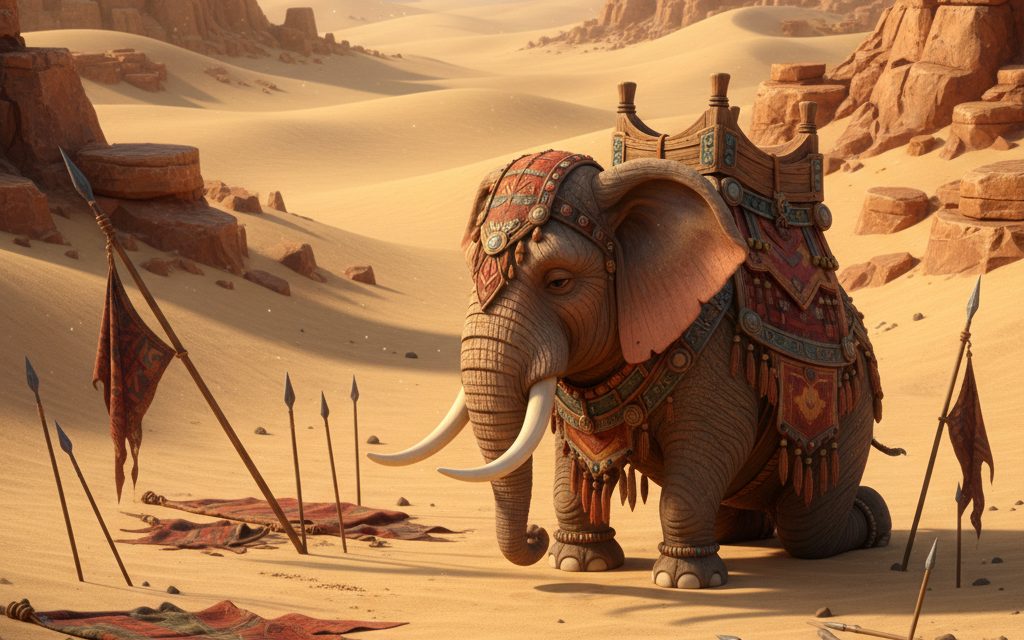
Abrahah decided he would destroy the Ka‘bah so that everyone would come to his building instead. He gathered a huge army of soldiers and something the people of Arabia had rarely seen in their deserts: a giant war elephant named Mahmud. With the elephant at the front, the army marched toward Makkah, feeling unstoppable because of their size and strength.
❓ What was the name of the ruler who led the army?
The Elephant Who Refused to Move
As the army reached the outskirts of Makkah, the people of the city knew they could not fight such a large force. Abdul-Muttalib, the grandfather of Prophet Muhammad ﷺ, told the people to take shelter in the mountains. He prayed to Allah, saying that the House belonged to Him and He would surely protect it. He knew that even the strongest army is nothing compared to the power of the Creator.
A miraculous thing happened when the army prepared to enter the sacred city. Mahmud, the great elephant, suddenly knelt down. No matter how much the soldiers pushed or threatened him, he refused to step toward the Ka‘bah. If they turned him toward Yemen or Syria, he would run, but the moment they pointed him toward Makkah, he sat still. This was a sign from Allah, but Abrahah ignored it.
🤔 Stop and Think
Why do you think Allah used small birds instead of a giant earthquake or a flood to stop the army?
❓ What did the elephant do when facing the Ka‘bah?
The Smallest Soldiers of Allah
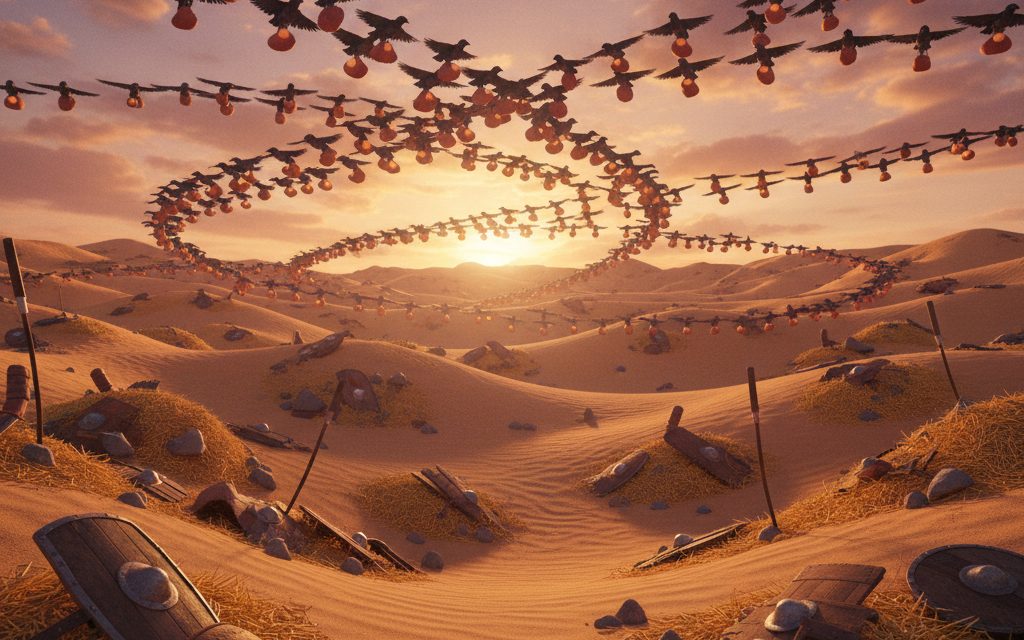
While the army was stuck, the sky began to change. It wasn't a storm of rain or wind that appeared, but a massive cloud of birds. These were not giant eagles or hawks, but small birds known as Ababil. Each bird carried three small stones—one in its beak and two in its claws. These stones were made of baked clay, yet they carried a force that no armor could stop.
The birds flew over the army and dropped the stones. By Allah's permission, these tiny pebbles defeated the entire mighty army. The soldiers and their elephants were scattered and broken, described in the Qur’an like 'eaten straw' or stalks of grain that have been chewed up by cattle. The proud king who thought he could destroy the House of Allah was forced to retreat in total defeat.
❓ What were the stones made of?
A Year of Miracles
The news of this event spread across all of Arabia. Everyone realized that the Ka‘bah was truly special and protected by a Divine power. This year became so famous that it was named 'The Year of the Elephant.' The Arabs used it as a calendar marker to remember important dates because the miracle was so undeniable and powerful.
💡 Did You Know?
The lead elephant was named Mahmud, and even though he was trained for war, he showed more respect for the Ka‘bah than the human soldiers did.
Most importantly, this miracle happened in the very same year that our beloved Prophet Muhammad ﷺ was born. It was as if the world was being prepared for his arrival. Allah cleared the enemies from Makkah and showed the world that the truth would always prevail over those who try to destroy what is sacred.
❓ Which famous person was born in the Year of the Elephant?
Lessons from the Pebbles
This story teaches us that we should never be arrogant about our strength or wealth. Abrahah had elephants and thousands of men, but he was defeated by tiny birds and small stones. Allah can use the smallest of His creatures to overcome the biggest obstacles. When we are on the side of truth, we do not need to be afraid of those who seem bigger than us.
We also learn about the sanctity of the Ka‘bah. It is a place of peace and safety. To this day, millions of people visit the House of Allah, just as Abdul-Muttalib trusted would happen. The army of the elephant is gone, but the Ka‘bah remains standing, a symbol of faith and the worship of Allah alone.
🔎 Source Check
The account of the birds and the 'eaten straw' is from Surah Al-Fil. The names of the elephant and the ruler Abrahah come from authentic Seerah (biographical) accounts and historical reports. The exact number of birds or stones is not specified in the Qur'an.
✨ Story questions: 0 / 4
💡 What can we learn?
🏮 Trivia quiz
1. How many stones did each bird carry?
2. Where did the army of Abrahah come from?
3. What is the meaning of the word 'Ababil' used in the Surah?
🖼 Picture match
Tap a word on the left, then its match on the right.
🧭 Order the story
Tap the events in the right order.
🎯 Multiple choice
❓ What did Allah compare the defeated army to in the Qur'an?
⚖️ True or false
Abdul-Muttalib tried to fight the army with his own soldiers.
🔍 Find the clue
🌱 Reflection: What can I learn?
Think about a time you felt small or worried. Just as Allah protected the Ka‘bah using small birds, He is always capable of helping us in ways we don't expect.
🗣 Teach it back
Can you explain to a friend how a giant elephant and a tiny bird were both part of Allah's plan to save the Ka‘bah?
📖 Find it in the Qur'an
Surah Al-Fil 105:1-5