
🧭 Learning Adventure — not a prophet chapter
Chapter 43 · 🕋
Makkah: The City of the Ka‘bah
A Sacred Valley in the Desert
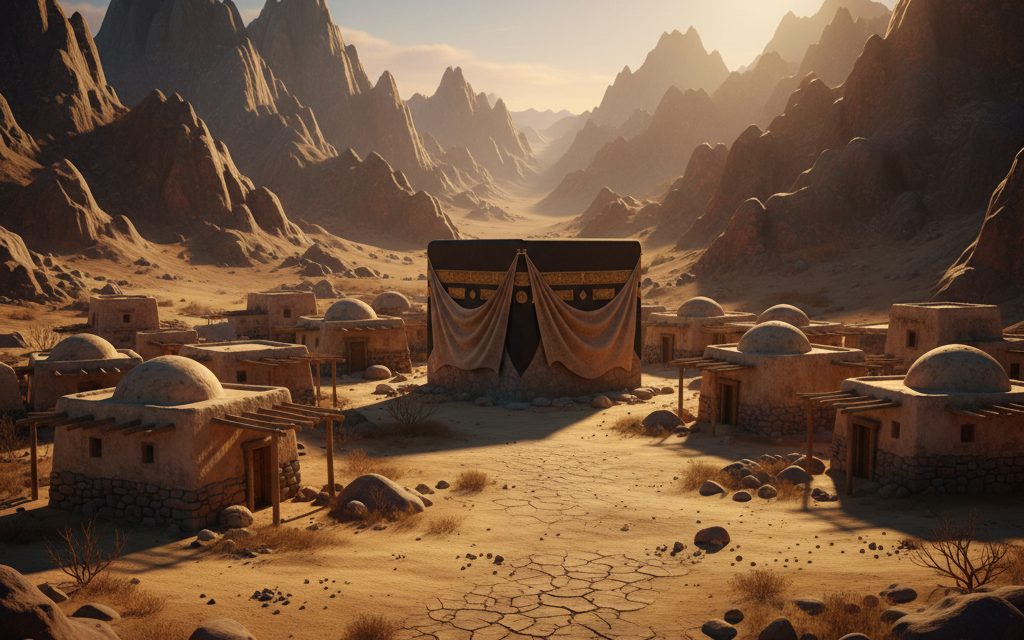
The Valley of Makkah
Makkah sits in a rocky valley surrounded by rugged mountains in the Hijaz region of Arabia. In the time before the Prophet Muhammad ﷺ was born, it was a dry and harsh place where very few plants could grow. The city was not built near a river or an ocean, yet it was one of the most famous places in the entire world. This was because of the special blessings Allah put in the land.
The most important feature of the city was the Ka‘bah, the cube-shaped house of worship. Near it was the Well of Zamzam, which provided life-giving water to everyone in the valley. Because water was so rare in the desert, this well made Makkah a place where people could survive and settle, even though the ground was mostly sand and stone.
❓ What was the name of the special well in Makkah?
The Sacred Sanctuary
Allah made Makkah a 'Haram,' which means a sacred sanctuary. In this special area, fighting was strictly forbidden, and even the trees and plants were not allowed to be cut down. This peace made Makkah a safe place for everyone. Even in times when different tribes across Arabia were at war, they would stop their fighting when they entered the boundaries of Makkah.
The Quraysh were the main tribe living in Makkah. They were divided into different clans, like Banu Hashim and Banu Makhzum. They were respected by other Arabs because they were the guardians of the Ka‘bah. They took their jobs very seriously, providing food and water to the pilgrims who traveled from far away to visit the holy house.
🤔 Stop and Think
Why do you think Allah chose a place with no rivers or gardens to be the most sacred city on Earth?
❓ Which tribe was the main group living in Makkah?
A Hub for Trade
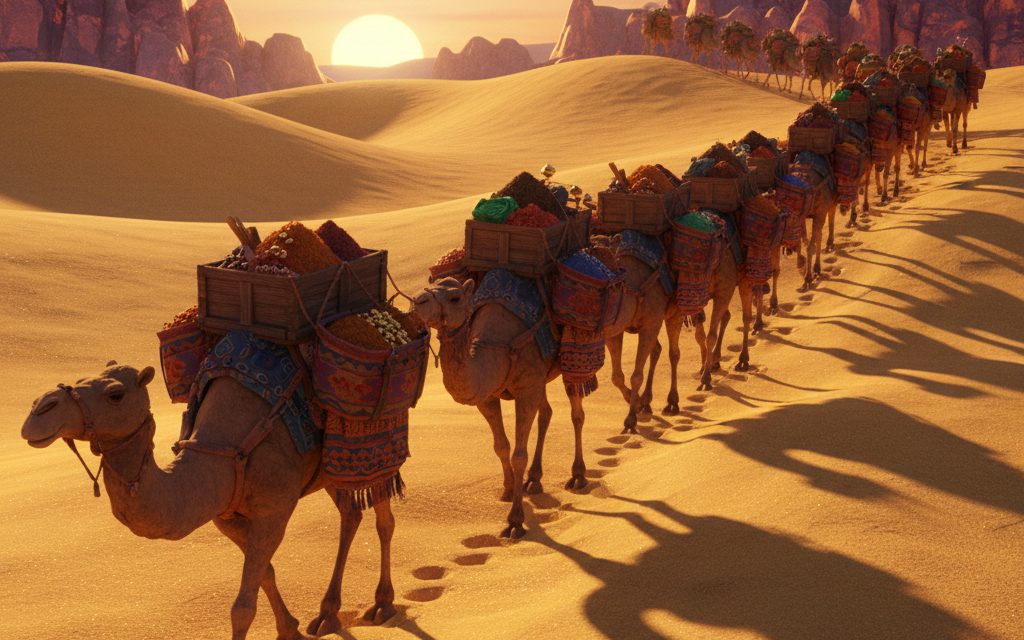
Because Makkah was so safe, it became a perfect place for trade. The Quraysh organized two giant caravan trips every year. In the winter, they traveled south to Yemen where it was warmer, and in the summer, they traveled north to Ash-Sham (Greater Syria) where it was cooler. They traded things like perfumes, leather, spices, and cloth.
These trade routes brought wealth to the city and allowed the people of Makkah to see products from the Roman and Persian empires. The market of ‘Ukaz, located near Makkah, was a place where poets would compete to see who could tell the best stories and poems, making Makkah a center for culture and language as well as money.
❓ Where did the summer trade caravans travel to?
The Pilgrimage Traditions
Even before the final message of Islam was revealed to Prophet Muhammad ﷺ, people remembered that the Ka‘bah was built by Prophet Ibrahim (peace be upon him) and his son Isma‘il (peace be upon him). Every year, tribes from all over the Arabian Peninsula would travel to Makkah for pilgrimage. They would perform Tawaf around the Ka‘bah, though many had sadly introduced statues and wrong practices by that time.
💡 Did You Know?
The name 'Bakkah' is also used in the Qur'an to refer to Makkah. Some scholars say Bakkah refers specifically to the area around the Ka‘bah itself.
During the months of Hajj, the city would become incredibly crowded. The sound of different dialects and the sight of thousands of camels filled the valley. The Quraysh would prepare large leather basins filled with sweetened water for the tired travelers, continuing the tradition of hospitality that started centuries earlier.
❓ Who originally built the Ka‘bah?
Life in the City
The houses in Makkah were built close together near the Ka‘bah, usually made of stone and dried mud. The most important meetings happened in a building called Dar al-Nadwa, where the elders of the clans discussed trade and safety. Life was tough because of the heat, but the people were proud of their heritage and their role as protectors of the sacred valley.
While the city was full of trade and life, it was waiting for a great change. The people still respected the Ka‘bah, but they had forgotten the true message of Tawhid (oneness of God) that Ibrahim (peace be upon him) had taught. The stage was set for the birth of the final Messenger ﷺ, who would bring the light of the Qur'an to this very valley.
🔎 Source Check
The description of the winter and summer caravans is from Surah Quraysh. The sacredness of the Haram is mentioned in Surah Al-Qasas. The history of the clans and Dar al-Nadwa comes from authentic Seerah (biography) books. The exact dates of when certain houses were built are approximate.
✨ Story questions: 0 / 4
💡 What can we learn?
🏮 Trivia quiz
1. What does the word 'Haram' mean regarding Makkah?
2. What was the name of the assembly house for the leaders of Makkah?
3. In which direction did the winter caravan travel?
🖼 Picture match
Tap a word on the left, then its match on the right.
🧭 Order the story
Tap the events in the right order.
🎯 Multiple choice
❓ What allowed the people of Makkah to survive despite having no farming land?
⚖️ True or false
It was allowed to cut down trees inside the Haram of Makkah for firewood.
🔍 Find the clue
🌱 Reflection: What can I learn?
Imagine traveling for weeks on a camel through the hot desert. How would you feel when you finally saw the Ka‘bah in the distance?
🗣 Teach it back
Can you explain to your family why Makkah was a safe place even when other tribes were fighting, and how they managed to get food and clothes without any farms?
📖 Find it in the Qur'an
106:1-4, 3:96, 28:57