
Prophet story 1 of 30
آدم
Adam
peace be upon him
The Beginning of the Human Story
✦ Step Into the Story
🔮 What Do You Already Know?
No pressure — just guess! This helps you see how much you grow.

Adam’s story begins before any city, farm, castle, or road existed. Allah created Adam and gave him a special place among creation. The Qur’an tells us that Allah taught Adam the names of things, showing the gift of knowledge and the ability to learn. When Allah informed the angels that He would place a successive authority on earth, the angels asked about the wisdom of creating beings who might cause harm. Allah answered that He knew what they did not know. Adam’s knowledge became part of that lesson.
❓ What did Allah teach Adam that showed the gift of knowledge?
Allah commanded the angels to prostrate to Adam as an act of obedience to Allah, not worship of Adam. They obeyed, except Iblis. Iblis was not an angel; the Qur’an identifies him as one of the jinn. Pride led him to refuse. He argued that he was better because he had been created from fire while Adam had been created from clay. His refusal shows how dangerous arrogance can be. Knowledge without humility can become a trap.
❓ Why did Iblis refuse to prostrate to Adam?
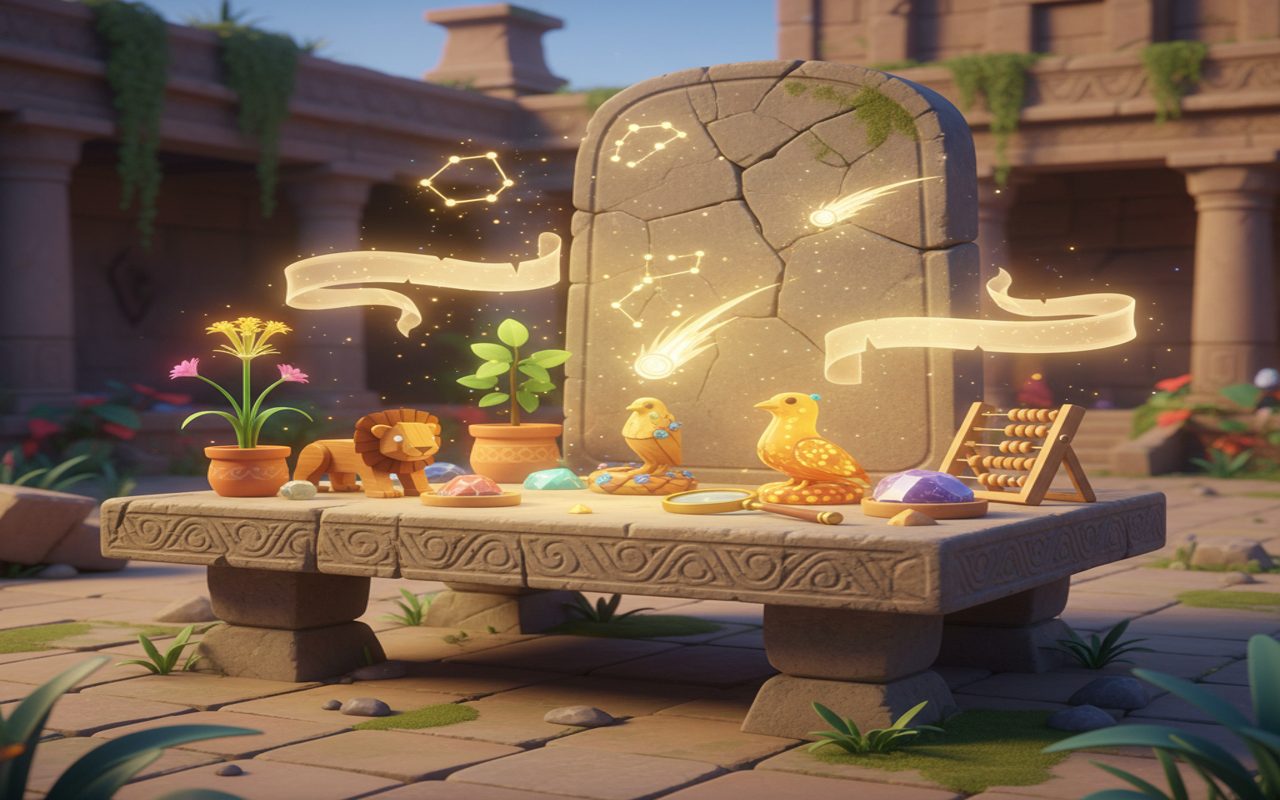
Adam and his wife were allowed to live in the Garden and enjoy its blessings, while being warned not to approach a particular tree. Iblis whispered to them and tried to make disobedience look attractive. They slipped and ate from the tree. The Qur’an does not present their mistake as the end of their story. Adam and his wife recognized their wrong and turned to Allah in repentance. Allah accepted Adam’s repentance. This becomes one of the most hopeful lessons in the story: people can make mistakes, but sincere repentance opens the way back to Allah.
❓ What did Adam and his wife do after they made a mistake?
Then human life on earth began. Earth would be a place of work, family, responsibility, choice, worship, learning, and testing. Allah promised guidance. Those who followed His guidance would not need to live in fear of being abandoned. Adam therefore stands at the beginning of both humanity and the long history of revelation.
The Qur’an later tells the story of two sons of Adam without naming them. Each offered a sacrifice. One was accepted and the other was not. Jealousy grew until one threatened to kill his brother. The righteous brother refused to answer evil with evil. Tragically, the jealous brother committed murder. A crow then showed him how to hide his brother’s body, leaving him full of regret. This story shows that the first family also faced serious moral choices. Being close to a prophet did not remove personal responsibility.
❓ What animal showed the son of Adam how to hide his brother's body?

Children sometimes imagine Adam’s world as empty and silent. But it is better to think of it as the beginning of discovery. Every sunrise, animal track, plant, mountain, and river belonged to a world humans were learning to understand. The story does not give us the details of Adam’s daily schedule, the design of his home, or exactly where he first lived on earth. Those details should not be invented. What the Qur’an does give us is more important: knowledge matters, arrogance destroys, temptation is real, repentance is powerful, and guidance from Allah is a gift.
Adam’s miracle is not a magic trick. His creation itself was extraordinary: Allah created him without a father or mother and taught him directly. The Qur’an compares the creation of Isa to Adam in the sense that Allah creates by His command. Adam’s story therefore invites children to think deeply about human dignity. Every person belongs to one human family. No child is better because of skin color, nationality, wealth, or language. Iblis’s error began with “I am better.” Adam’s story teaches the opposite: honor comes through obedience, humility, and righteousness.
❓ How does the Qur'an compare the creation of Isa to Adam?
When you finish this chapter, remember Adam not only as the first human and first prophet, but also as the first learner, the first person to make a mistake and repent, and the beginning of a long line of prophets sent to guide people back to Allah.
✨ Miracle Spotlight
Allah created Adam without a father or mother and taught him knowledge. His creation and Allah’s direct teaching are extraordinary signs of divine power.
🌙 Pause & Imagine
Close your eyes for ten seconds and imagine the environment from this story without imagining the prophet’s appearance. What do you hear: wind, animals, water, tools, footsteps, or a busy marketplace? What colors would the sky, stone, sand, wood, or plants have looked like? The goal is to enter the setting while keeping the prophet respectfully unseen.
💡 Did You Know?
Prophetic stories in the Qur’an are not arranged as one ordinary history textbook. The same prophet may appear in several surahs, with each passage highlighting a different lesson. That is why good storytelling should connect verses carefully instead of pretending every detail appears in one place.
🔤 Arabic Word Discovery
Tawbah
turning back to Allah and saying sorry
“When I make a mistake, I make tawbah and try again.”
✨ Story questions: 0 / 5
🎓 What Did You Learn?
Finish the story first, then test what you learned.
Real-Life Mission
Say sorry and repair one mistake today.
🛂 Finish reading to earn this stamp.
💡 What can we learn?
🏮 Trivia quiz
1. Who was the first human and prophet?
2. What special gift did Allah teach Adam?
3. Who refused the command because of pride?
4. What did Adam do after making a mistake?
5. What lesson does the story teach about mistakes?
🖼 Picture match
Tap a word on the left, then its match on the right.
🧭 Order the story
Tap the events in the right order.
🎯 Multiple choice
❓ What was Iblis created from, according to his own argument?
⚖️ True or false
The Qur'an provides the exact location where Adam first lived on earth.
🔍 Find the clue
🌱 Reflection: What can I learn?
“From Adam, I want to practice…”
🌟 Famous Stories
A Gift to a Future Prophet 📜 Authentic hadithJami` at-Tirmidhi 3076
When Allah created Adam, peace be upon him, He showed him pictures of all the people who would ever be born from him. Adam saw all of his children and grandchildren, stretching far into the future. Among them, he saw the prophets who would come after him, each with a special light.
Adam, peace be upon him, noticed one of his descendants who had a beautiful light but was destined to have a very short life. This was the future Prophet Dawud (David). Adam felt love and compassion for him and asked Allah, "O Lord, how long is his life?" Allah replied that it was sixty years. Adam, whose own lifespan was one thousand years, said, "O Lord, grant him forty years from my life."
Allah granted his request. Much later, when the Angel of Death came to Adam, peace be upon him, after 960 years had passed, Adam was surprised. He thought he still had forty years left. The angel reminded him of his gift to Prophet Dawud. A hadith tells us that because Adam forgot his promise, his descendants also tend to forget.
💡 Lesson: Our promises are important, and we should be generous and compassionate towards others.
❓ Quick questions
Question 1 / 3
Which future prophet did Adam (peace be upon him) see would have a short life?
A Conversation Across Time 📜 Authentic hadithSahih al-Bukhari 3409
Our Prophet Muhammad (peace and blessings be upon him) told us about a special conversation that happened between the souls of Prophet Adam and Prophet Musa, peace be upon them both. In a way that only Allah knows, Musa met Adam, the father of all humanity, and spoke to him.
Musa, peace be upon him, gently questioned Adam. He said that because Adam had left the Garden, all of humanity, his descendants, were sent down to Earth to face struggles and difficulties. It was as if Musa was asking Adam why he had caused this to happen to everyone.
Adam, peace be upon him, replied calmly. He reminded Musa that Allah had written this destiny long before Adam was even created. He asked, "Do you blame me for an action which Allah had decreed for me before He created me by forty years?" Our Prophet Muhammad (peace and blessings be upon him) said that Adam's argument was stronger. This teaches us about Allah's divine plan, known as Qadr.
💡 Lesson: We must have faith in Allah's divine plan (Qadr), as everything happens for a reason that He knows best.
❓ Quick questions
Question 1 / 3
Which prophet had a conversation with the soul of Adam (peace be upon him)?
🤲 Prophetic Dua
قَالَا رَبَّنَا ظَلَمْنَآ أَنفُسَنَا وَإِن لَّمْ تَغْفِرْ لَنَا وَتَرْحَمْنَا لَنَكُونَنَّ مِنَ ٱلْخَٰسِرِينَ
Transliteration: Qaalaa Rabbanaa zalamnaaa anfusanaa wa illam taghfir lanaa wa tarhamnaa lanakoonanna minal khaasireen
Meaning: They said, "Our Lord, we have wronged ourselves, and if You do not forgive us and have mercy upon us, we will surely be among the losers."
Who said it: Adam and Hawwa together · Al-A'raaf 7:23
📖 Where Is This Story in the Qur'an?
👪 For parents & teachers
Qur'an references: Al-Baqarah 2:30–39; Al-A‘raf 7:11–27; Ta-Ha 20:115–123; Al-Ma’idah 5:27–31
Detail notes: Stories are based on the Qur'an first. Where a detail comes from hadith or later historical reports, the text says so. Please review with a trusted teacher.
Translations are provided for learning. For Qur'anic wording, refer to an approved Qur'an translation in your language.