
🧭 Learning Adventure — not a prophet chapter
Chapter 47 · 🐪
The Hijrah Route
A Journey of Faith, Planning, and Trust
The Strategic Exit
The journey began not with a grand parade, but with silence and secrecy. While the enemies watched the front door of the Prophet Muhammad ﷺ, a careful plan was already in motion. Abu Bakr (may Allah be pleased with him) had prepared two sturdy camels, fed and strengthened for the harsh desert terrain. This teaches us that even when we trust in Allah, we must do our best to prepare ourselves and use the means available to us.
To confuse those who might follow, they did not head north toward Madinah immediately. Instead, they traveled south to the Cave of Thawr. They stayed there for three nights, while Abu Bakr’s children, Asma and Abdullah, brought them food and news of what was happening in Makkah. This shows the importance of having a loyal family and friends who support one another in times of difficulty.
❓ Why did they travel south to Cave Thawr first?
The Miracle at Cave Thawr
The cave was a small, rugged opening on a steep mountain. While they stayed inside, the Quraysh search parties came so close that their feet were visible from within the cave. Abu Bakr was worried, but the Prophet ﷺ comforted him by saying, 'What do you think of two, the third of whom is Allah?' This moment is a powerful reminder that when we are with Allah, we are never truly alone.
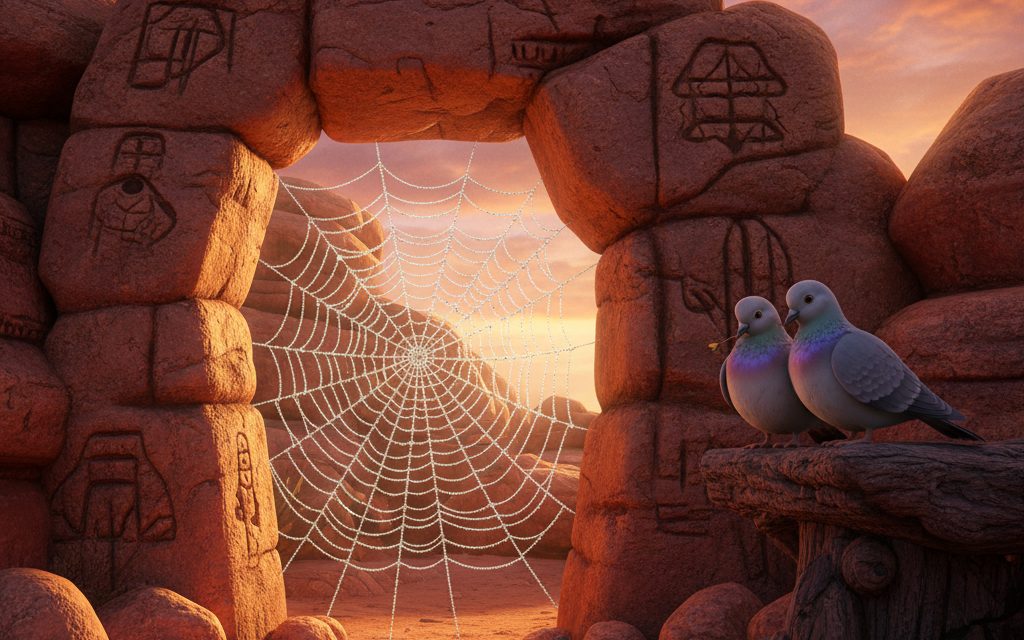
History and Seerah traditions mention that Allah protected them using the simplest of His creatures. It is commonly narrated that a spider wove a web and a dove laid eggs at the entrance, making the cave look undisturbed and old. Though scholars debate the strength of these specific details, the ultimate truth is that Allah blinded the eyes of the pursuers from seeing His Messenger ﷺ.
🤔 Stop and Think
If you had to plan a secret journey today, what three things would you prioritize to stay safe and successful?
❓ What did the Prophet ﷺ say to Abu Bakr in the cave?
Crossing the Burning Sands
After leaving the cave, they took a coastal route that was rarely used by caravans. They hired a skilled guide named Abdullah ibn Urayqit, who was not a Muslim at the time but was known for his honesty and knowledge of the hidden paths. This illustrates that we can work with trustworthy people of different faiths to achieve a good goal through professional expertise.
The heat was intense, and the sand was unforgiving. They traveled mostly at night to avoid the sun and to stay hidden from bounty hunters. One such hunter, Suraqa ibn Malik, spotted them, but every time he tried to approach, his horse’s legs sank into the hard ground by the power of Allah. Recognizing the miracle, Suraqa asked for forgiveness and turned back, even misdirecting other searchers to protect the group.
❓ Why was a non-Muslim guide hired?
A Rest at the Tent of Umm Ma’bad
During the long trek, the group stopped at the tent of an elderly woman named Umm Ma’bad. She was known for her kindness to travelers. The group was hungry and thirsty, but her only goat was old and could not produce milk. With Allah's permission, the Prophet ﷺ touched the goat, and it produced so much milk that the entire group and the woman herself drank until they were full.
💡 Did You Know?
The Islamic calendar, known as the Hijri calendar, does not start with the birth of the Prophet ﷺ, but with the year of the Hijrah, because it represents the birth of the Muslim community.
This event was a sign of the barakah (blessing) that follows the righteous. Umm Ma’bad later described the Prophet ﷺ to her husband with beautiful words, noting his noble character and peaceful presence. This stop was a moment of mercy in the middle of a stressful escape, showing how Allah provides for His servants in the middle of the desert.
❓ What happened to Suraqa's horse?
The Arrival at Quba
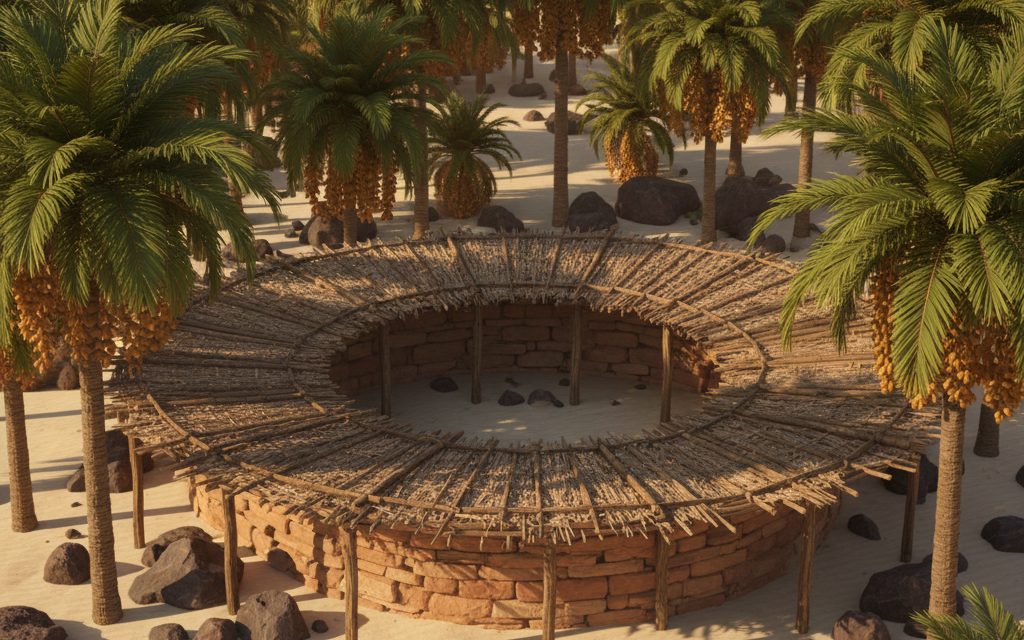
Finally, after many days of travel, the palm trees of the oasis of Quba appeared on the horizon. This was the outskirts of Madinah. The people of the city had been waiting every day at the edge of the harra (volcanic rock plains), looking for the arrival of the Prophet ﷺ. When he finally arrived, the joy was unlike anything the city had ever seen.
In Quba, the first masjid of Islam was built, marking a new beginning. The Hijrah was not just a flight from danger, but a journey toward building a community based on brotherhood, justice, and the worship of Allah. The route from Makkah to Madinah changed the world forever, proving that with trust in Allah and careful planning, any obstacle can be overcome.
🔎 Source Check
The conversation in the cave is mentioned in the Qur'an (9:40). The travel details, the guide, and Suraqa's story are from authentic Hadith (Bukhari). The spider/dove details are popular in Seerah but their chains of narration are debated by scholars. Geography is based on historical desert routes.
✨ Story questions: 0 / 4
💡 What can we learn?
🏮 Trivia quiz
1. How many nights did they stay in Cave Thawr?
2. What was the name of the woman whose goat gave milk miraculously?
3. Which city was the destination of the Hijrah?
🖼 Picture match
Tap a word on the left, then its match on the right.
🧭 Order the story
Tap the events in the right order.
🎯 Multiple choice
❓ What is the lesson of 'Tawakkul' shown in the Hijrah?
⚖️ True or false
The Hijrah route followed the main trade highway used by all caravans.
🔍 Find the clue
🌱 Reflection: What can I learn?
Think about a time you were scared or worried. How does the Prophet's ﷺ trust in Allah at Cave Thawr help you feel braver?
🗣 Teach it back
Can you explain to a friend how the Prophet ﷺ used both 'planning' (like a guide and a secret route) and 'trust' (relying on Allah) at the same time?
📖 Find it in the Qur'an
9:40