
🧭 Learning Adventure — not a prophet chapter
Chapter 53 · 🕋
The Conquest of Makkah: Mercy in Strength
A Day of Humility and Forgiveness
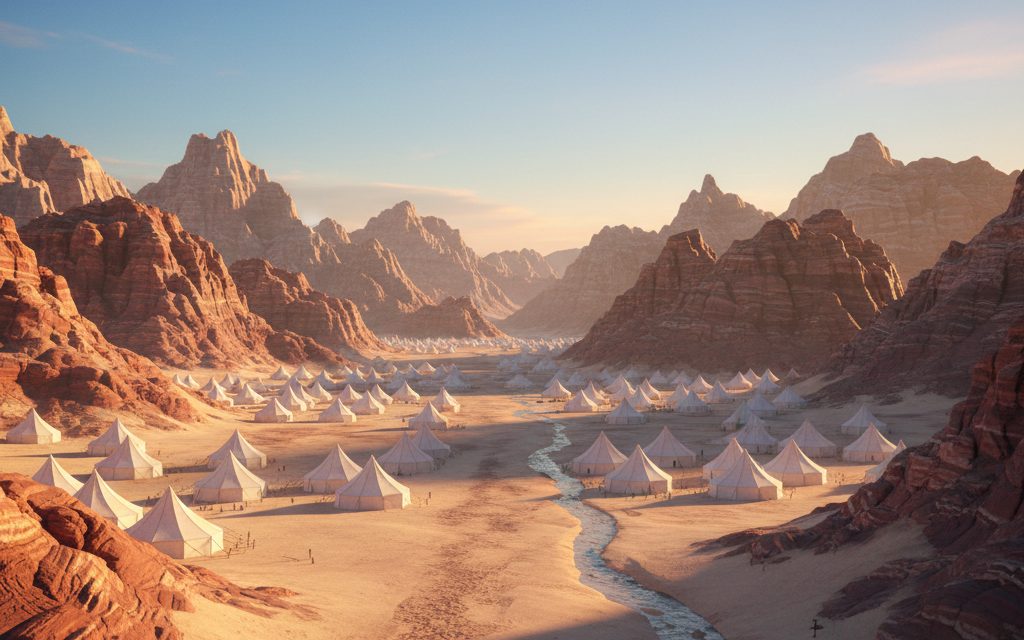
The Return to the Sacred City
In the eighth year after the Hijrah, the Prophet Muhammad ﷺ returned to Makkah, the city he had been forced to leave years before. He did not come as a proud conqueror seeking revenge. Instead, he entered the city riding his camel, Al-Qaswa, with his head bowed so low in humility to Allah that his beard almost touched the saddle. Ten thousand companions followed him, yet the atmosphere was one of quiet dignity and peace rather than noise and war.
❓ What was the name of the Prophet's ﷺ camel?
The people of Makkah, who had once mistreated the Muslims, were afraid of what might happen. However, the Prophet ﷺ declared that anyone who stayed in their own home, or entered the house of Abu Sufyan, or sought refuge in the Ka'bah would be safe. This was a day of mercy, not a day of fighting. The Muslim army was strictly ordered not to harm anyone unless they were attacked first, ensuring the sanctity of the holy city was preserved.
Cleansing the Ka'bah
The Prophet ﷺ proceeded to the Ka'bah, the house built by Ibrahim (peace be upon him) for the worship of Allah alone. At that time, 360 idols were placed around it. Using his staff, the Prophet ﷺ pointed at each idol, and they fell over as he recited: 'Truth has come, and falsehood has vanished. Indeed, falsehood is bound to vanish.' The Ka'bah was being restored to its original purpose: a sanctuary for the One True God.
❓ How many idols were around the Ka'bah?
Bilal ibn Rabah, the caller to prayer, was then asked to climb onto the roof of the Ka'bah. His beautiful voice rang out across Makkah, calling the Adhan. This moment signaled a new era where the light of Islam replaced the darkness of idol worship. The companions watched with tears of joy as the symbols of shirk (associating partners with Allah) were removed, and the sounds of Tawhid (oneness of Allah) filled the air.
🤔 Stop and Think
If someone had treated you unkindly for years, and suddenly you were in charge, would you find it easy to forgive them like the Prophet ﷺ did?
A Lesson in Forgiveness
After the city was secured, the people of Makkah gathered near the Ka'bah, waiting to hear their fate. These were the same people who had persecuted, boycotted, and fought against the Muslims for twenty years. The Prophet ﷺ asked them, 'O Quraish, what do you think I am going to do with you?' They replied, 'You are a noble brother and the son of a noble brother.' They hoped for mercy, even though they had shown very little of it in the past.
The Prophet ﷺ responded with words that echoed those of Prophet Yusuf (peace be upon him) to his brothers: 'No blame shall be on you today. Go, for you are free.' This act of mass forgiveness is one of the greatest examples of mercy in human history. Instead of taking wealth or punishing his enemies, the Prophet ﷺ chose to win their hearts through kindness. Most of the people of Makkah were so moved that they entered Islam willingly.
❓ Which Prophet's words did Muhammad ﷺ quote when forgiving the Makkans?
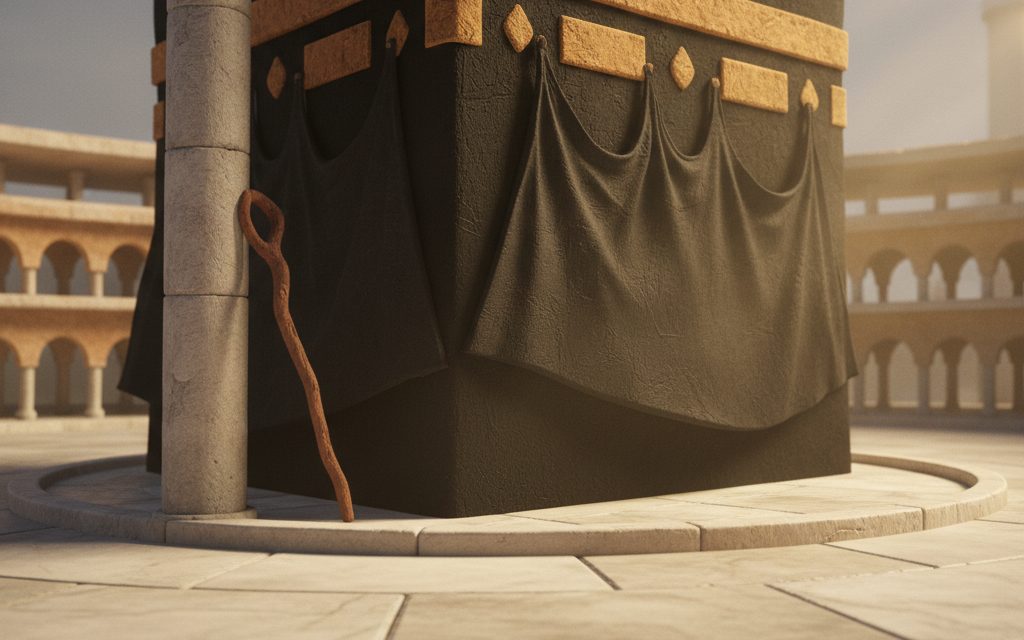
The Keys of the Sanctuary
Even in a position of total power, the Prophet ﷺ remained just. He called for Uthman ibn Talha, whose family had traditionally held the keys to the Ka'bah. Although Uthman was not yet a Muslim at that moment, the Prophet ﷺ returned the keys to him, saying that the custody of the Ka'bah would remain with his family forever. This showed that Islam respects established rights and promotes justice for all.
💡 Did You Know?
The Prophet ﷺ entered Makkah wearing a black turban and refused to stay in his old house, instead camping in a tent to show he did not seek worldly possessions.
The conquest was a spiritual victory more than a military one. There was very little blood shed, and the city was taken with minimal conflict. The Muslims did not loot the city or destroy the homes of their former enemies. This behavior proved to the world that the goal of Islam was not to build an empire, but to establish the worship of Allah and spread peace among mankind.
The Legacy of the Opening
Makkah was now a city of peace once again. The Prophet ﷺ stayed for a few weeks to teach the people about Islam and to ensure the city was organized according to the guidance of the Qur'an. He eventually returned to Madinah, showing his loyalty to the Ansar (the helpers) who had supported him when he had no home. He did not move back to Makkah, despite it being his birthplace and the location of the Sacred House.
❓ Where did the Prophet ﷺ go after staying in Makkah for a few weeks?
The Conquest of Makkah, often called the 'Fath Makkah' (the Opening of Makkah), teaches us that true strength lies in the ability to forgive when you have the power to punish. It reminds us to remain humble during our successes and to always credit Allah for our victories. Today, millions of Muslims visit Makkah every year, walking the same paths where this great mercy was shown over 1,400 years ago.
🔎 Source Check
The entry into Makkah and the removal of idols are recorded in Sahih Bukhari and Muslim. The Prophet's ﷺ speech to the Quraish is found in the Seerah of Ibn Hisham. The exact number of 10,000 companions is a common historical estimation.
✨ Story questions: 0 / 4
💡 What can we learn?
🏮 Trivia quiz
1. Who did the Prophet ﷺ ask to call the Adhan from the roof of the Ka'bah?
2. In which Islamic year did the Conquest of Makkah take place?
3. What verse did the Prophet ﷺ recite while removing the idols?
🖼 Picture match
Tap a word on the left, then its match on the right.
🧭 Order the story
Tap the events in the right order.
🎯 Multiple choice
❓ How did the Prophet ﷺ enter Makkah to show his humility?
⚖️ True or false
The Prophet ﷺ forced all the people of Makkah to leave their homes.
🔍 Find the clue
🌱 Reflection: What can I learn?
True victory is not about defeating people, but about winning their hearts through kindness and bringing them closer to the Truth.
🗣 Teach it back
Can you explain to me how the Prophet ﷺ showed humility when he entered Makkah, and why he chose to forgive his enemies instead of punishing them?
📖 Find it in the Qur'an
17:81