
🧭 Learning Adventure — not a prophet chapter
Chapter 49 · 🛡️
Badr: Courage and Reliance
Victory through Faith and Dua
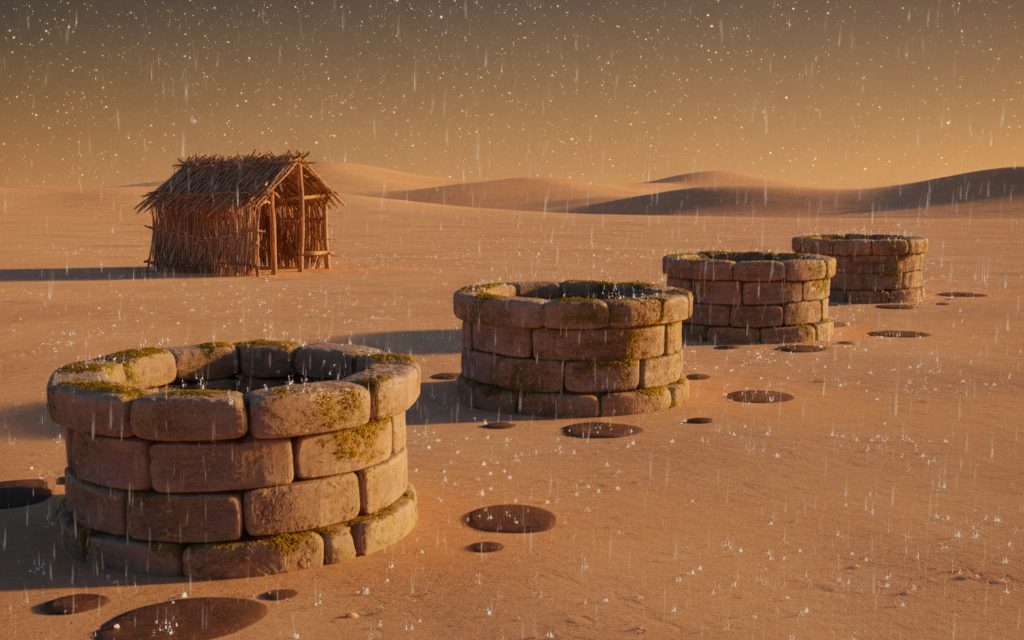
The Gathering at the Wells
In the second year after the Hijrah, a significant moment occurred near the wells of Badr. The Muslims, numbering only about 313, found themselves facing a much larger and better-equipped army. They had not set out for a major battle, but they soon realized they were standing at a crossroads of history. The companions (may Allah be pleased with them) showed incredible loyalty, telling Prophet Muhammad ﷺ that they would stand by him just as the followers of Musa (peace be upon him) should have stood by their messenger.
The atmosphere was one of deep reliance on Allah. The Muslims were tired and outnumbered, but their hearts were firm. They set up camp near the water, following the strategic advice of Al-Hubab ibn Mundhir, which the Prophet ﷺ graciously accepted. This reminds us that even the most courageous leaders listen to the wisdom of others and plan carefully while trusting in the Creator.
❓ Who gave the Prophet ﷺ advice about where to camp?
The Power of Dua
As the night before the battle fell, a beautiful miracle occurred. While the army rested, Allah sent a calm, refreshing sleep over the believers to give them strength. He also sent down rain from the sky. For the Muslims, the rain softened the sand under their feet, making it firm to walk on, while for their opponents, the ground became muddy and difficult. This was a clear sign that Allah was watching over them.
Inside a small shelter, Prophet Muhammad ﷺ spent the night in intense prayer. He stretched his hands toward the sky, pleading with Allah for help and victory. He showed us that while we must try our best with our actions, our ultimate strength comes from our connection to Allah. Abu Bakr (may Allah be pleased with him) comforted the Prophet ﷺ, reminding him that Allah would surely fulfill His promise of help.
🤔 Stop and Think
If you were one of the 313, and it started to rain softly before a big challenge, how would that make you feel about Allah's help?
❓ What two things did Allah send the night before the battle?
Angels Descend
When the encounter began, the difference in numbers was clear, but the unseen world was active. The Qur'an tells us that Allah sent down thousands of angels to assist the believers and to bring peace to their hearts. The angels were not there to do everything for the humans, but to stand with them, reinforcing their courage and making their ranks feel strong.
The Muslims fought with great restraint and bravery. They were taught not to be the aggressors but to defend their faith and their right to exist. It was a day of 'Al-Furqan,' the Criterion, because it clearly separated truth from falsehood. The victory that followed was not due to the number of swords or horses, but due to the help of Allah alone.
❓ How many angels did Allah initially promise to help the believers?
Restraint and Character
Even in the heat of such a difficult day, the Muslims were taught to maintain their character. They were reminded not to let hatred lead them into doing wrong. After the battle, the Prophet ﷺ gave specific instructions on how to treat the prisoners of war. They were to be fed the same food as the Muslims and treated with kindness and dignity.
💡 Did You Know?
The Battle of Badr took place on the 17th day of Ramadan, the same month in which the Qur'an was first revealed.
This level of mercy was unheard of at the time. Some prisoners were freed for a ransom, while those who were literate were given the chance to earn their freedom by teaching ten Muslim children how to read and write. This shows us that even in victory, a Muslim seeks to spread knowledge and show the beauty of Islamic character.
❓ How could a literate prisoner earn their freedom?
The Lesson for Us
Badr teaches us that being 'small' or 'few' doesn't matter if Allah is with you. Courage isn't about not being afraid; it is about trusting Allah more than you trust your own strength. When we face big challenges in our lives, we should remember the wells of Badr—the rain, the prayers in the night, and the help that came from the heavens.
We also learn that victory belongs to Allah. After the battle, it was important for the believers to remain humble and give thanks to Him. We should always say 'Alhamdulillah' for our successes, knowing that every good thing we achieve is a gift from our Merciful Creator.
🔎 Source Check
The rain and the sending of angels are mentioned in the Qur'an (Surah Al-Anfal). The specific number of companions (approx. 313) and the story of the prisoners teaching children are found in authentic Seerah and Hadith literature. The exact location of the wells is a geographical fact.
✨ Story questions: 0 / 4
💡 What can we learn?
🏮 Trivia quiz
1. What is the day of Badr called in the Qur'an?
2. How many Muslims participated in the battle?
3. Which close friend stayed by the Prophet ﷺ in the shelter?
🖼 Picture match
Tap a word on the left, then its match on the right.
🧭 Order the story
Tap the events in the right order.
🎯 Multiple choice
❓ What was the main reason the Muslims won at Badr?
⚖️ True or false
The Muslims were allowed to treat their prisoners harshly because they had won.
🔍 Find the clue
🌱 Reflection: What can I learn?
Think of a time you were scared to do something right. Did you ask Allah for help? How did it feel when you finally finished the task?
🗣 Teach it back
Can you explain how the rain helped the Muslims differently than it helped their opponents?
📖 Find it in the Qur'an
8:9-11, 3:123-126