
Prophet story 8 of 30
إسماعيل
Isma'il
peace be upon him
Patience, Promise, and Building the Ka‘bah
✦ Step Into the Story
🔮 What Do You Already Know?
No pressure — just guess! This helps you see how much you grow.

Ismail was the son of Ibrahim and is remembered in the Qur’an as truthful to his promise, a messenger, a prophet, and someone who encouraged his family to pray and give charity. His story is closely connected to Makkah, the Ka‘bah, sacrifice, and trust in Allah.
❓ What two things did Ismail encourage his family to do?
The Qur’an does not narrate every detail of Ismail’s childhood. Authentic hadith, however, tells the well-known story of Ibrahim bringing Hajar and the infant Ismail to the barren valley of Makkah. There was no city full of shops, no green fields, and no flowing river. Ibrahim left them with limited provisions by Allah’s command.
When Hajar realized that the departure was commanded by Allah, she trusted that Allah would not abandon them. Later, when water ran out, she hurried between the hills of Safa and Marwah searching for help. After repeated effort, Allah provided the spring of Zamzam near Ismail. This event became part of the rites of Hajj and Umrah.
❓ Between which two hills did Hajar search for help?
The lesson is not “wait and do nothing.” Hajar trusted Allah while running, searching, and taking action. Tawakkul means relying on Allah while using the means available to you.

Ismail grew up in the valley. The tribe of Jurhum later settled nearby after seeing birds that indicated the presence of water. Ismail learned Arabic among them according to authentic hadith reports.
❓ From which tribe did Ismail learn Arabic?
One of the most powerful episodes connected with Ismail is the sacrifice test. In Surah As-Saffat, Ibrahim tells his son about a dream in which he sees himself sacrificing him. The Qur’an does not name the son in that passage, but Muslim tradition widely identifies him as Ismail. The son responds with astonishing courage: he tells his father to do what he has been commanded and says that, if Allah wills, he will be patient.
When father and son submit, Allah stops the sacrifice and provides a great ransom. Muslims remember this act of submission during Eid al-Adha. The point is not violence. The point is obedience, trust, and Allah’s mercy.
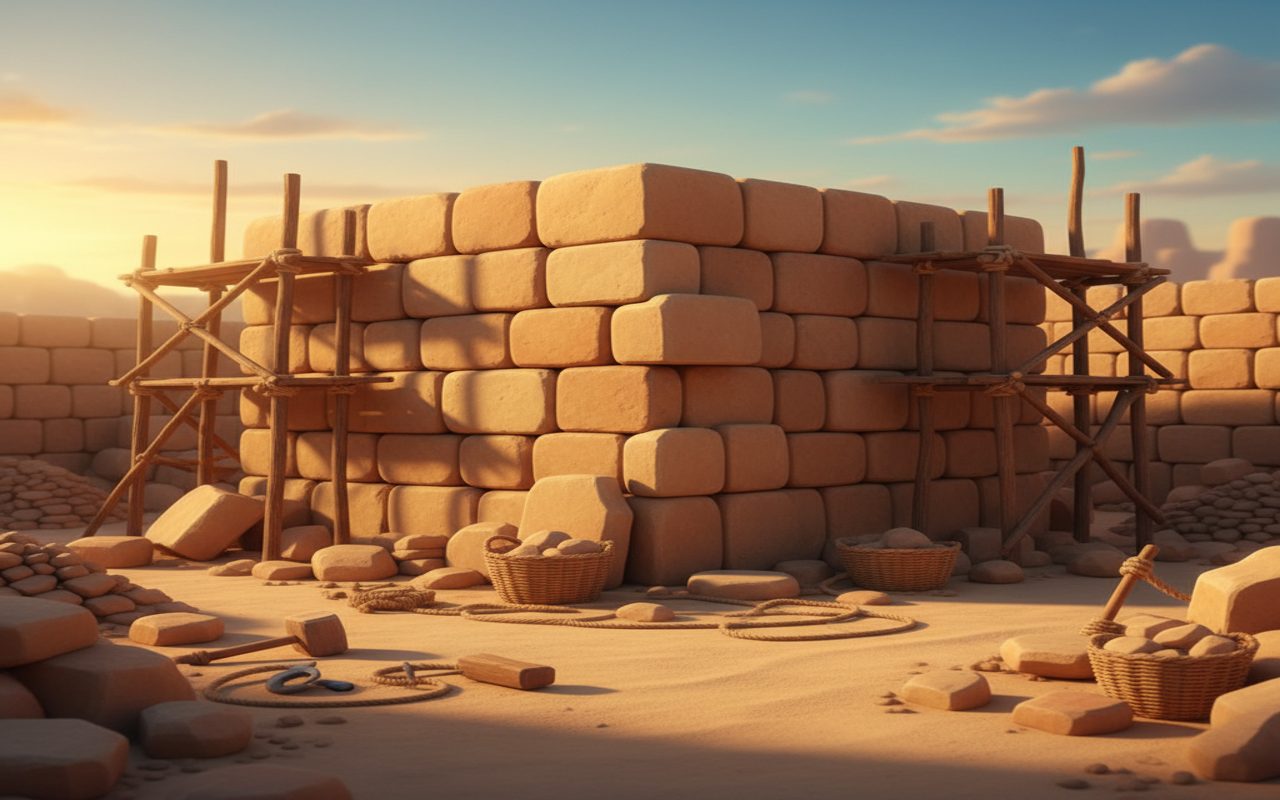
Later, Ibrahim and Ismail raised the foundations of the Ka‘bah. Imagine the father and son working with stone in the hot valley, not building a palace for themselves but a house dedicated to the worship of Allah. As they built, they prayed, asking Allah to accept their work. They also prayed for a messenger to arise among their descendants, a prayer Muslims connect with the coming of Prophet Muhammad ﷺ.
❓ What did Ibrahim and Ismail build together?
The Qur’an praises Ismail for keeping his promises. That quality can become a child-friendly challenge. If you say, “I will put away my toys,” do it. If you promise to return something you borrowed, return it. Prophetic character can show up in small actions.
❓ Which specific character trait is Ismail praised for?
Miracle spotlight: the provision of Zamzam in the barren valley is connected to Ismail’s early life through authentic hadith, and the sacrifice was replaced by Allah’s mercy. The Ka‘bah’s building is not itself a miracle, but it became one of the greatest centers of worship on earth.
Picture prompts can show the empty valley of Makkah under a bright sky; the hills of Safa and Marwah with footprints in the sand; clear Zamzam water bubbling among stones; a peaceful ram in a desert valley after the sacrifice test; and the early Ka‘bah foundations with stacked stones and tools.
Ismail’s story is full of movement: desert travel, searching for water, a growing settlement, a great test, and building the Ka‘bah. Yet the hidden theme through all of it is trust. Hajar trusted. Ibrahim trusted. Ismail trusted.
The reader can finish by writing one promise on a card and keeping it that day. That is a simple way to live one of the qualities Allah praised in Ismail.
✨ Miracle Spotlight
Authentic hadith connects Ismail’s infancy with the provision of Zamzam. The sacrifice test ended with Allah providing a ransom.
🌙 Pause & Imagine
Close your eyes for ten seconds and imagine the environment from this story without imagining the prophet’s appearance. What do you hear: wind, animals, water, tools, footsteps, or a busy marketplace? What colors would the sky, stone, sand, wood, or plants have looked like? The goal is to enter the setting while keeping the prophet respectfully unseen.
💡 Did You Know?
Prophetic stories in the Qur’an are not arranged as one ordinary history textbook. The same prophet may appear in several surahs, with each passage highlighting a different lesson. That is why good storytelling should connect verses carefully instead of pretending every detail appears in one place.
🔤 Arabic Word Discovery
Ta'ah
obedience to Allah
“Praying on time is ta'ah.”
✨ Story questions: 0 / 5
🎓 What Did You Learn?
Finish the story first, then test what you learned.
Real-Life Mission
Avoid wasting water today.
🛂 Finish reading to earn this stamp.
💡 What can we learn?
🏮 Trivia quiz
1. Who was Ismail’s father?
2. What quality does the Qur’an praise in Ismail?
3. Which sacred structure did Ibrahim and Ismail raise?
4. What famous water source is associated with Ismail’s childhood in authentic tradition?
5. What did Ismail encourage his family to do?
🖼 Picture match
Tap a word on the left, then its match on the right.
🧭 Order the story
Tap the events in the right order.
🧩 Think about it
Promise Keeper: choose which promises are realistic, honest, and responsible.
🎯 Multiple choice
❓ What is the meaning of 'Tawakkul' as shown by Hajar?
⚖️ True or false
The Qur’an provides every single detail about Ismail’s childhood.
🔍 Find the clue
🌱 Reflection: What can I learn?
“From Ismail, I want to practice…”
🌟 Famous Stories
Raising the Foundations of the Ka'bah 📖 Qur'anAl-Baqarah 2:125-127
Many years after leaving Hajar and the baby Isma'il in the desert, Prophet Ibrahim, peace be upon him, returned to Makkah. Allah gave him a very important command: to build a house for the worship of the One True God. This house was the Ka'bah. His son, Isma'il, peace be upon him, was now a young man and was ready to help his beloved father with this blessed project. Together, they began their work, raising the walls of the sacred house stone by stone.
Prophet Isma'il would find and carry the stones, and Prophet Ibrahim, a master builder, would place them. As the walls grew higher, Ibrahim stood on a special stone, which is now known as Maqam Ibrahim (the Station of Ibrahim), to help him reach. They did not just work with their hands; they worked with their hearts, remembering Allah with every stone they laid. This was not a house for them to live in, but a special place for all people to come and worship Allah for all time.
While they were building, they made a beautiful and humble prayer to Allah. The Qur'an tells us they said: "Our Lord, accept this from us. Indeed, You are the Hearing, the Knowing." They asked Allah to accept their work and to make them and their children a nation that submits to Him. Their hard work and sincere prayer were the foundation of the Ka'bah we see today, a center of worship for millions of Muslims around the world.
💡 Lesson: Important work for Allah should be done with cooperation, humility, and prayer.
❓ Quick questions
Question 1 / 3
Who did Prophet Ibrahim (peace be upon him) build the Ka'bah with?
The Threshold of the Door 📜 Authentic hadithSahih al-Bukhari 3364
After Isma'il, peace be upon him, grew up and got married in Makkah, his father Ibrahim, peace be upon him, came to visit him. Isma'il was not home, so Ibrahim met his son's wife. He asked her how they were doing. She complained about their life, saying they had very little and were in a difficult situation. Before leaving, Ibrahim, peace be upon him, gave her a message for Isma'il: "When your husband returns, tell him to change the threshold of his door." When Isma'il came home and heard the message, he understood his father's wisdom. The 'threshold' meant his wife, and his father was advising him to part with her because of her ungrateful character.
Following his father's wise advice, Isma'il, peace be upon him, separated from his first wife and later married another woman. Some time passed, and Prophet Ibrahim came to visit again. Once more, Isma'il was not home. Ibrahim met his new daughter-in-law and asked her about their life. This wife praised and thanked Allah. She said they were doing well and had plenty, even though their situation was much the same. She was grateful for everything they had.
Happy to hear this, Ibrahim, peace be upon him, left a different message for his son. He said, "When your husband returns, tell him to keep the threshold of his door firm." When Isma'il heard this message, he understood that his father was pleased with this wife and was advising him to cherish her. This showed Isma'il's deep respect for his father's guidance and the importance of having a grateful and righteous spouse.
💡 Lesson: We should always be grateful for what Allah has given us and listen to the wise advice of our parents.
❓ Quick questions
Question 1 / 3
What did the 'threshold of the door' mean in Prophet Ibrahim's message?
🤲 Prophetic Dua
وَإِذْ يَرْفَعُ إِبْرَٰهِۦمُ ٱلْقَوَاعِدَ مِنَ ٱلْبَيْتِ وَإِسْمَٰعِيلُ رَبَّنَا تَقَبَّلْ مِنَّآ ۖ إِنَّكَ أَنتَ ٱلسَّمِيعُ ٱلْعَلِيمُ
Transliteration: Wa iz yarfa'u Ibraaheemul qawaa'ida minal Baitiwa Ismaa'eelu Rabbanaa taqabbal minnaa innaka Antas Samee'ul Aleem
Meaning: And [mention] when Abraham was raising the foundations of the House and [with him] Ishmael, [saying], "Our Lord, accept [this] from us. Indeed You are the Hearing, the Knowing.
Who said it: Ibrahim and Isma'il together, while raising the Ka'bah · Al-Baqara 2:127
رَبَّنَا وَٱجْعَلْنَا مُسْلِمَيْنِ لَكَ وَمِن ذُرِّيَّتِنَآ أُمَّةًۭ مُّسْلِمَةًۭ لَّكَ وَأَرِنَا مَنَاسِكَنَا وَتُبْ عَلَيْنَآ ۖ إِنَّكَ أَنتَ ٱلتَّوَّابُ ٱلرَّحِيمُ
Transliteration: Rabbanaa waj'alnaa muslimaini laka wa min zurriyyatinaaa ummatam muslimatal laka wa arinaa manaasikanaa wa tub 'alainaa innaka antat Tawwaabur Raheem
Meaning: Our Lord, and make us Muslims [in submission] to You and from our descendants a Muslim nation [in submission] to You. And show us our rites and accept our repentance. Indeed, You are the Accepting of repentance, the Merciful.
Who said it: Ibrahim and Isma'il together · Al-Baqara 2:128
📖 Where Is This Story in the Qur'an?
👪 For parents & teachers
Qur'an references: Maryam 19:54–55; Al-Baqarah 2:125–129; As-Saffat 37:100–107
Detail notes: Stories are based on the Qur'an first. Where a detail comes from hadith or later historical reports, the text says so. Please review with a trusted teacher.
Translations are provided for learning. For Qur'anic wording, refer to an approved Qur'an translation in your language.